Both can be scaled without oxygen.
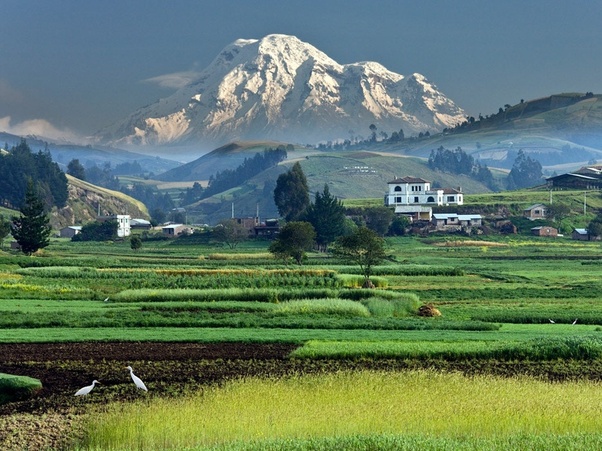
The atmosphere-to-sea-level ratio determines how dangerous things get. Everest climbs to 29,029 feet (8,848 meters), while Chimborazo’s peak is 20,548 feet (6,263 meters).
The main distinction is not so much an issue of being higher in the absolute sense but rather of your atmospheric elevation.
Because Chimborazo is close to the equatorial bulge, the top sits in thicker air than Everest even although technically it is closer to space.
While at Everest’s top the air pressure is a cruel 33%, at the height of Chimborazo it is almost 50% of sea level. Everest is significantly more difficult for the human body because of this great variation in available oxygen.
Though highly perilous, it has been done.
The closer you are to the equator, the more vertically widespread is earth’s atmosphere. Chimborazo being almost exactly on the equator, it means that on it’s summit slightly over 6200m, you’ll breathe denser air than at the top of a same altitude mountain located closer to the poles. The best example would be to compare air density with Denali, located in Alaska. Around the same altitude, but a significantly lower atmospheric pressure. Unfortunately, I don’t know the latitude correction formula, nor how temperature fluctuations between summer and winter (which are major in Alaska, but non existant in Ecuador) affect the result. Bottom line though, is that the factors influencing ease of breathing are the same that favors rapid mountain growth, and slowed down erosion, which makes the distance from Earth’s core as a reference point even more absurd than it already is when it comes to appreciate a mountain’s height.
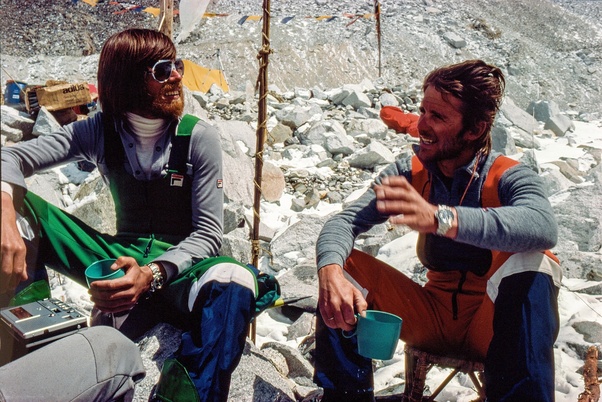
First to summit without additional oxygen in 1978 were Reinhold Messner and Peter Habeler. Many believed it impossible; physicians claimed their minds would be irreversibly harmed.
Still, they showed it could be done. Less than 2 percent of all summits, only some 200 climbers have effectively ascended Everest without oxygen since then.
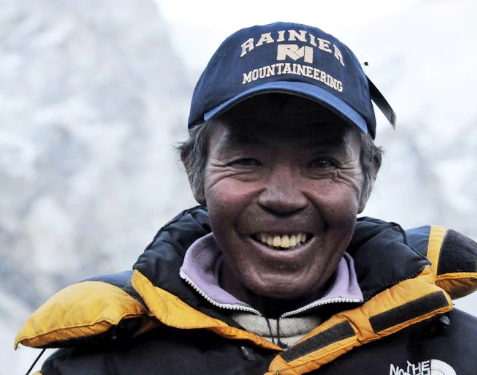
Ang Rita Sherpa was one of them; he did it ten times to becoming known as “Snow Leopard.”
Climbers enter what is known as the “death zone” over 26,000 feet without oxygen though. Every minute the body suffers damage.
Most can just remain conscious for a few hours.
At high altitude, in frigid temperatures, your brain gradually stops working properly, pretty much like running a marathon while inhaling through a straw.