If an Ohio-class submarine launches its payload, it sheds over 2.6 million pounds in minutes. By the laws of physics, it should shoot to the surface like a cork. But it doesn’t move an inch.
The misconception that these submarines experience severe buoyancy problems comes down to simple but incomplete math. Each Trident II D5 missile weighs approximately 130,000 pounds. People intuitively understand basic buoyancy: if a submerged object suddenly loses thousands of tons of weight, it is easy to imagine the submarine violently breaching the ocean surface, completely exposing itself to enemy radar after a launch.
However, naval engineers anticipated this massive shift in physics long before the first Ohio-class boat ever touched the water.
The reality is that an Ohio-class submarine does not actually lose any net weight during a missile launch, thanks to a highly complex hovering and missile compensation system. Here is how it works:
- Water Replacement: SLBMs are “cold launched.” They are ejected from their launch tubes by a massive pulse of pressurized steam. The moment the missile clears the tube and heads toward the surface, valves open to allow seawater to instantly flood the empty space.
- Compensation Tanks: Because seawater and a Trident missile do not have the exact same density, simply flooding the tube is not enough to maintain perfect neutral buoyancy. The submarine utilizes dedicated compensation tanks. As the missile leaves, water is transferred and adjusted between these tanks to precisely match the 130,000 pounds that just exited the vessel.
- Hovering Systems: During the launch sequence, the submarine engages an automated hovering system. This system uses gyroscopes and rapid-response pumps to make micro-adjustments to the ship’s trim, keeping the submarine perfectly level and at the exact correct depth for the next launch.
Instead of bobbing to the surface, the submarine remains remarkably stable. The illusion of a buoyancy crisis simply stems from visualizing the massive weight of the departing missiles while forgetting about the millions of pounds of ocean water specifically engineered to take their place.
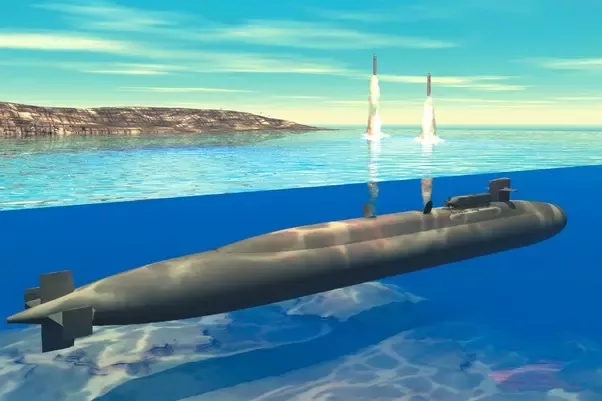
An artist’s concept of an Ohio-class submarine launching Tomahawk cruise missiles.