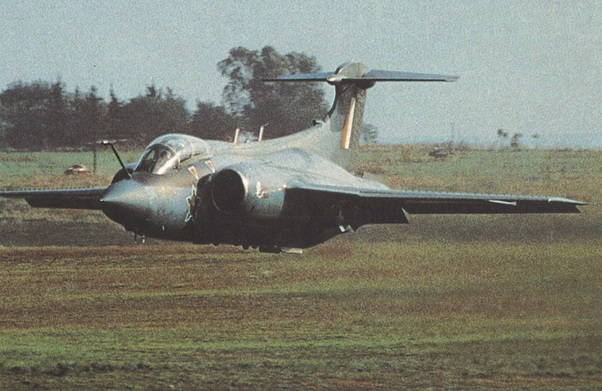
They can. Could they not, no aircraft could ever take off or land. Some aircraft are more stable at that height than others. The most famous Air Force for low level flight is probably the British RAF and the most famous aircraft the Blackburn Buccaneer.
As the joke went “Why do Buccaneers returning from a low-level mission, climb just before landing?” Answer: “They have to get ground clearance to lower the undercarriage.”
There is a famous story of the RAF taking part in a NATO exercise in the US where the RAF had to take the part of a low-level Russian below-radar attacker. Nobody wants to be embarrassed in these exercises so they are a tad scripted.
The US fighters knew they were coming so positioned right on the deck. After a while they contacted the powers to be, to say that the Brits were a no-show, only to be informed they had long flow past them. The US pilots denied it, saying they were on the deck and nothing had flown across their airspace. The response was (I paraphrase), “It’s the RAF. You failed to look below you!”
The only obstacles for low flying are exactly what you expect: trees, terrain, buildings, powerlines, and even ocean waves. Some airplanes like the F-111 above have computer assistance to help the pilot navigate and evade terrain, which can be useful in low light or bad visibility. Modern cruise missiles also have this feature while many airplanes at least have a warning system alerting the pilot they’re getting too close to the surface.
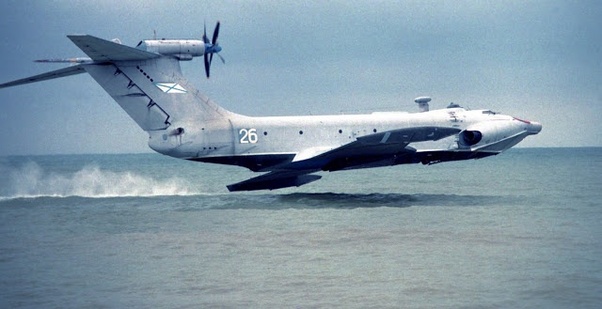
A special class of airplanes designed to “float” just above the surface are ground effect vehicles. Airplanes of all kinds get extra lift when they’re less than one wingspan above the ground (as a rule of thumb). GEVs use this to their advantage to lift bigger and heavier airplanes than what is normally possible (and with less wing area). They’re better on paper than in reality, with the vast majority of GEV projects failing to produce a working vehicle since they rely on calm surface to work.