If you think that the current international power struggles are already intense enough, it only shows that you don’t understand the true history.
When discussing the rise of great powers, many people like to say an old saying: “The world’s number one power will spare no effort to suppress the world’s number two power.”
So, when the United States, now a “superpower,” was just a rising “number two” more than two hundred years ago, how did the then “world leader,” the British Empire, treat it?
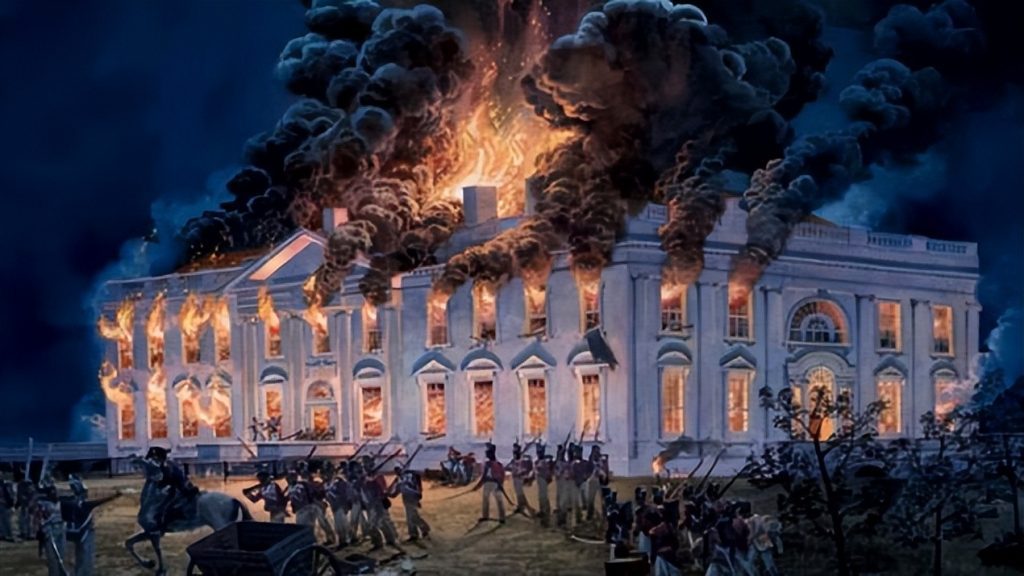
The truth may surprise many. To thoroughly subjugate the United States, the British not only imposed technological blockades and trade dumping, but also launched a direct military invasion, and even burned down the presidential residence!
Absolute technological blockade: Not even a single blueprint or a single craftsman can be taken away.
Let’s rewind to the late 18th century. Britain had just embarked on its sweeping Industrial Revolution, becoming a veritable “workshop of the world” thanks to its advanced textile machines and steam engines. Meanwhile, the United States, having just gained independence from British rule through the War of Independence, was seen by the British as nothing more than a giant cotton-growing farm.
In order to maintain its absolute hegemonic position, Britain imposed an extremely strict “technology blockade” on the United States.
The British Parliament at the time directly passed a law: strictly prohibiting the export of any textile machinery or blueprints overseas; even more audacious, it strictly prohibited any skilled craftsmen who possessed core technologies from immigrating to the United States.
Anyone who dared to smuggle blueprints out of the country would face confiscation of all their property and imprisonment, or even be charged with treason. The British had a shrewd plan: as long as the United States lacked industrial technology, it would be forever Britain’s “source of raw materials” and “market for dumping goods.”
But no matter how strong the defenses are, they can’t stop some people from trying to “slip through” their defenses.
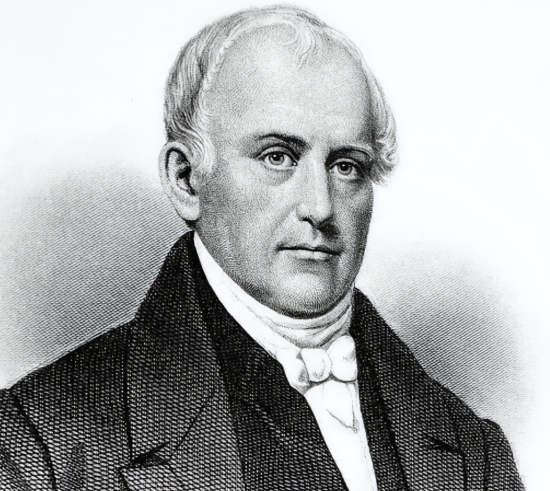
In 1789, a 21-year-old Englishman named Samuel Slater made a crazy decision. He had once been an apprentice in Britain’s most advanced spinning mill and knew the intricacies of every gear and screw in the machines. To evade a thorough search by British customs, Slater didn’t take away a single drawing, not even the size of a fingernail.
He disguised himself as an illiterate farmer and memorized the entire set of extremely complex blueprints for the spinning machine! In this way, Slater successfully boarded a passenger ship bound for America. Upon arrival, relying on his astonishing memory, he perfectly memorized and replicated Britain’s most advanced machinery, directly establishing America’s first water-powered spinning mill in Rhode Island.
This move greatly excited US President George Washington, who hailed him as the “Father of the American Industrial Revolution.” However, in the eyes of the British across the ocean, Slater became a vengeful “traitor.” Although the US had managed to create an opening through this “hardcore technology theft,” Britain’s suppression of the US had only just begun.
Brutal economic strangulation and military invasion: A fire burned down the White House
By the early 19th century, although the United States had begun to develop primary industries, its foundation was far too weak. Seeing a loophole in its technological blockade, the British Empire immediately changed its strategy, using its vast capital and production capacity to launch a devastating economic attack on the United States.
At the time, British merchant ships, laden with bulk shipments of inexpensive industrial goods, crossed the Atlantic and dumped them in the United States at prices even below cost. American small, fledgling factories with rudimentary equipment were simply unable to compete with the high-quality, low-priced goods produced on British assembly lines and faced closure.
Furthermore, Britain, leveraging its overwhelming naval superiority as the world’s leading navy, acted with impunity at sea. During the Napoleonic Wars, in an effort to blockade France, Britain directly ordered that any American merchant ships bound for continental Europe must first stop at British ports and pay taxes!
What humiliated Americans even more was the “forced conscription” incident. British warships frequently intercepted American merchant ships on the high seas, using the pretext of “finding deserters” to kidnap thousands of American sailors and force them to serve in the Royal Navy.
Faced with this bullying that deprived them of their right to trade and survival, the young United States finally could no longer tolerate it. In 1812, the United States formally declared war on Great Britain, an event known as the “Second War of Independence.”
The Americans at the time initially believed that with Britain’s main forces locked in a fierce battle with Napoleon in Europe, they could gain some advantage on the North American front. However, they severely underestimated the depth and ruthlessness of the “world’s superpower.”
Not only did Britain heavily arm Native American tribes on the border, supporting them in attacking American settlers and hindering America’s westward expansion, but in August 1814, it also dispatched an elite fleet that sailed down the Chesapeake Bay and marched all the way to Washington, D.C., the U.S. capital!
On that day, US President Madison and a group of high-ranking officials fled in panic. British troops swaggered into the presidential residence, ate the lavish dinner that had been prepared for the president, and then set fire to the presidential residence, the Capitol Building, and many other government buildings, burning them to the ground.
After the fire was extinguished, to cover the unsightly charred marks on the walls, the Americans had to repaint the presidential residence in white. This is the origin of the famous “White House” today—its white color is etched with the memory of one of the most humiliating periods in American history, a time of humiliation and defeat.
The most deadly “division scheme”: the mastermind behind the Civil War
The timeline shifted to the mid-19th century, the 1860s. At this time, although the United States had suffered a severe beating, it was experiencing a period of rapid expansion in both the North’s industry and the South’s plantation economy, thanks to its vast land, a continuous influx of European immigrants, and towering tariff protection walls.
A massive, soon-to-be-integrated United States instilled unprecedented fear in Britain. Britain’s top elites understood that the best way to permanently eliminate the American threat was not to defeat it from the outside, but to dismantle it from within.
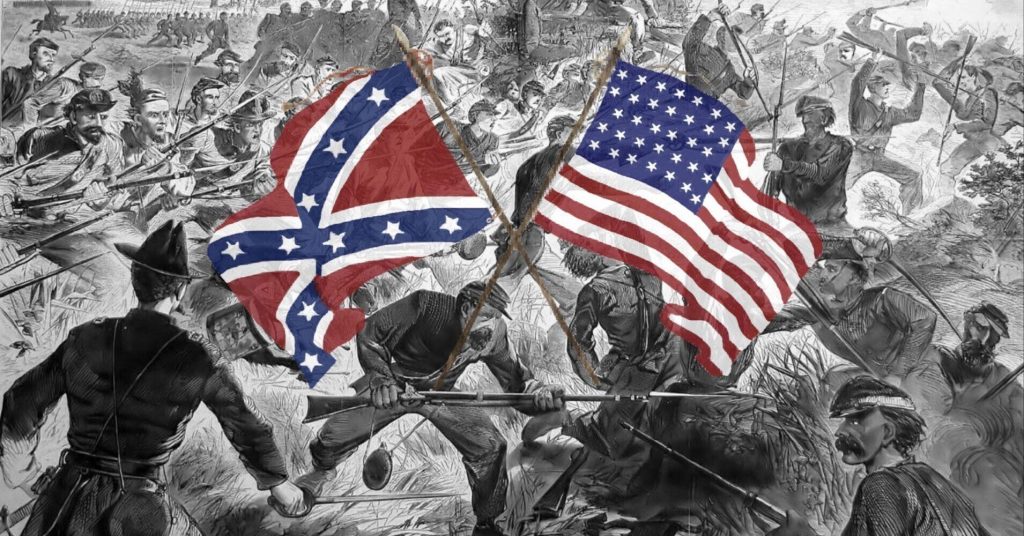
The opportunity soon arrived. In 1861, the devastating American Civil War broke out. The North, representing the industrial bourgeoisie, hoped for a unified market and higher tariffs to protect domestic industries; while the South, representing the slave-owning plantation economy, strongly demanded free trade, as cotton produced in the South was precisely the raw material most urgently needed by the British textile industry.
In this civil war that would determine the fate of the United States, the British Empire did not hesitate to side with the dividing South.
Although Britain outwardly declared “neutrality,” in reality, the entire British upper class and media were enthusiastically supporting the separatist forces in the South. They believed that if the United States split into two mutually hostile small countries, it would no longer be able to pose a threat to the hegemony of the British Empire, while Britain could continue to enjoy cheap cotton supplied by the South.
To substantially aid the South, British capitalists began purchasing Confederate war bonds on a massive scale, essentially providing them with financial support. Even worse, British shipyards disregarded international law and secretly built several highly advanced steam-powered raiding ships for the Confederacy. The most famous of these was the USS Alabama. This warship, built by the British and equipped with British cannons, relentlessly hunted down Union merchant ships in naval battles, sinking and capturing over 60 American Union vessels, inflicting devastating damage on the North’s maritime trade.
At this critical juncture, US President Lincoln demonstrated remarkable political wisdom. He knew that if the British government formally recognized Southern independence and intervened militarily, the United States would be doomed. Therefore, Lincoln decisively issued the Emancipation Proclamation.
This declaration elevated the nature of the civil war from a simple “struggle between unity and division” to a “struggle between freedom and slavery.” This move was a decisive blow. Because slavery had already been abolished in England, the British people morally could not allow their government to support a regime that retained slavery.
Under immense public pressure within Britain, the British government ultimately did not dare to cross the red line for formal military intervention, thus narrowly escaping a fate of complete dismemberment for the United States.
The End of Financial Control: How Did the Boss Get Outlasted?
Even after the American Civil War, Britain did not relinquish its control over the United States. Since force could not defeat it, and division could not be achieved, then the chains of capital would suffice.
In the latter half of the 19th century, London was the undisputed global financial center. The United States, in its post-Civil War reconstruction and westward expansion (especially the construction of the transcontinental railroad), required massive amounts of capital. British capital seized this opportunity, attempting to turn the United States into a mere “laborer” of British capital by controlling core infrastructure and banking sectors.
For a time, the largest shareholders of many American railroad companies were British nobles. The British fantasized that as long as they controlled America’s financial lifeline, no matter how hard the Americans worked, the profits would ultimately flow back into London’s pockets.
However, history did not follow the British script. Although the Americans brought in British capital, they effectively kept it all within their own borders through extremely strict protectionist policies. The United States, utilizing its vast, unified domestic market, quickly absorbed this capital and transformed it into its own steel, coal, and electricity production capacity.
In 1894, a landmark historical moment occurred: after nearly a century of suppression, humiliation, civil war, and containment, the United States’ total industrial output finally surpassed that of Britain, becoming the world’s largest.
The once invincible British Empire, in the years that followed, fell into industrial hollowing out due to its over-reliance on the cheap profits of its vast colonies. Ultimately, the intense drain of its national strength caused by the two world wars forced it to hand over the reins of global hegemony to the “second-in-command” it had once burned down the White House and targeted at every turn.
Conclusion
Looking back at this history, we can easily see that the transfer of power on the international stage has never been a warm and gentle “abdication,” but rather a cruel and ruthless struggle. The British Empire’s suppression of the United States back then involved every extreme means imaginable, including technological blockades, trade wars, military intimidation, and even supporting secession.
But this did not stop the rise of the United States. What truly determines whether a country can break through suppression is always its internal cohesion, its relentless pursuit of core technologies, and its ability to build a strong industrial base.
History always repeats itself, only the protagonists change.