Yes!
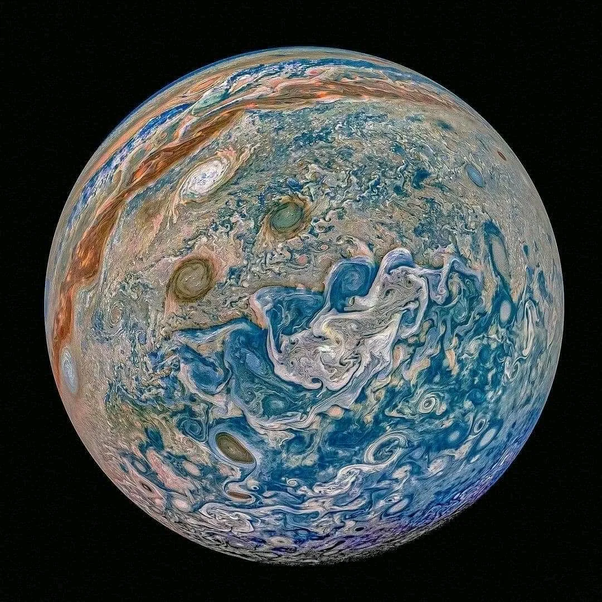
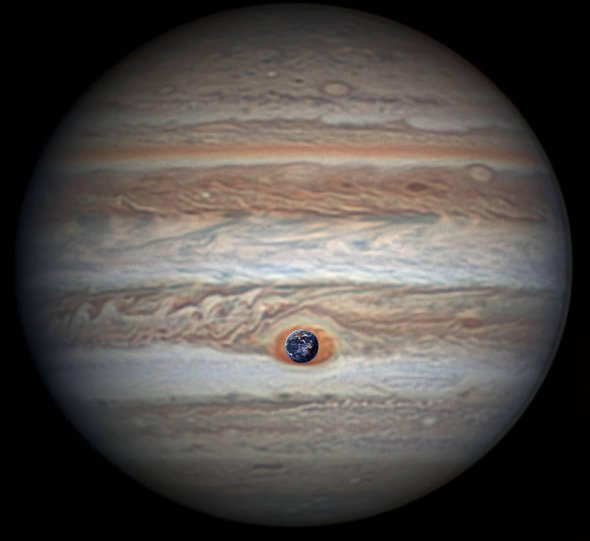
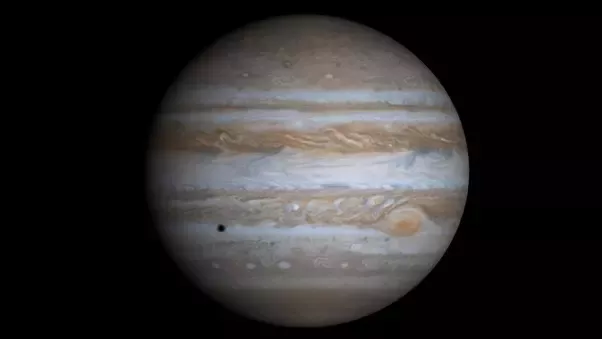
Jupiter, The biggest planet in our solar system. It is so massive that 1300 earths could fit inside of this planet. Jupiter is 2.5 times more massive than all the other planets in our solar system combined!
This is our tiny earth compared to the Jupiter:
Jupiter is so big that the center of gravity of the sun and Jupiter is outside of sun. Although extremely close to the surface of the sun.
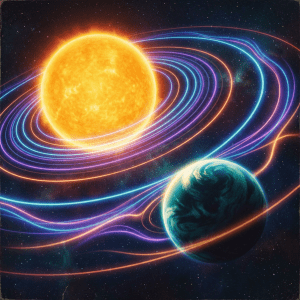
So the sun and Jupiter both orbit around their center of gravity which is also known as barycenter.
Barycenter is the center of mass of two or more bodies that orbit one another and is the point about which the bodies orbit.
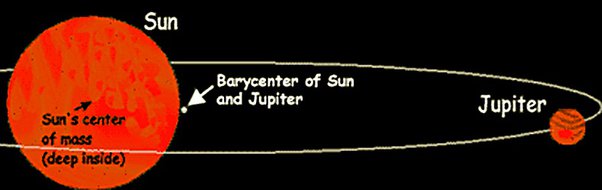
Technically Jupiter orbits around the barycenter of sun and Jupiter which is located outside of the sun.
So, Yes! Jupiter is so large that it doesn’t orbit around the sun. Fascinating!
Now other planets in solar system are so small that barycenter of the sun and a planet like earth lies inside of the sun. (Also very near to the center of sun.)
So it looks like other planets are orbiting the center of the sun.
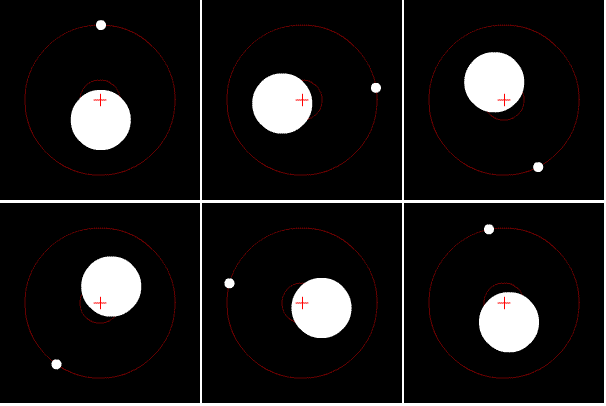
To understand this you can also imagine spinning a kid like this:
(Could be dangerous. Imagine only.)

The center of gravity of you and the kid would be somewhere very near to your feet. So you’re spinning almost at the same place but the kid is orbiting around you. This is exactly what happens with the sun and the other planets.
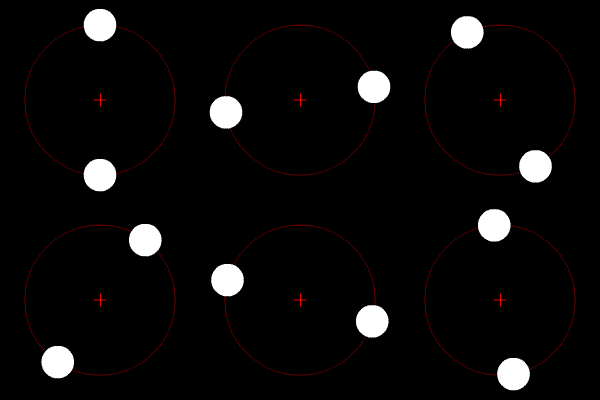
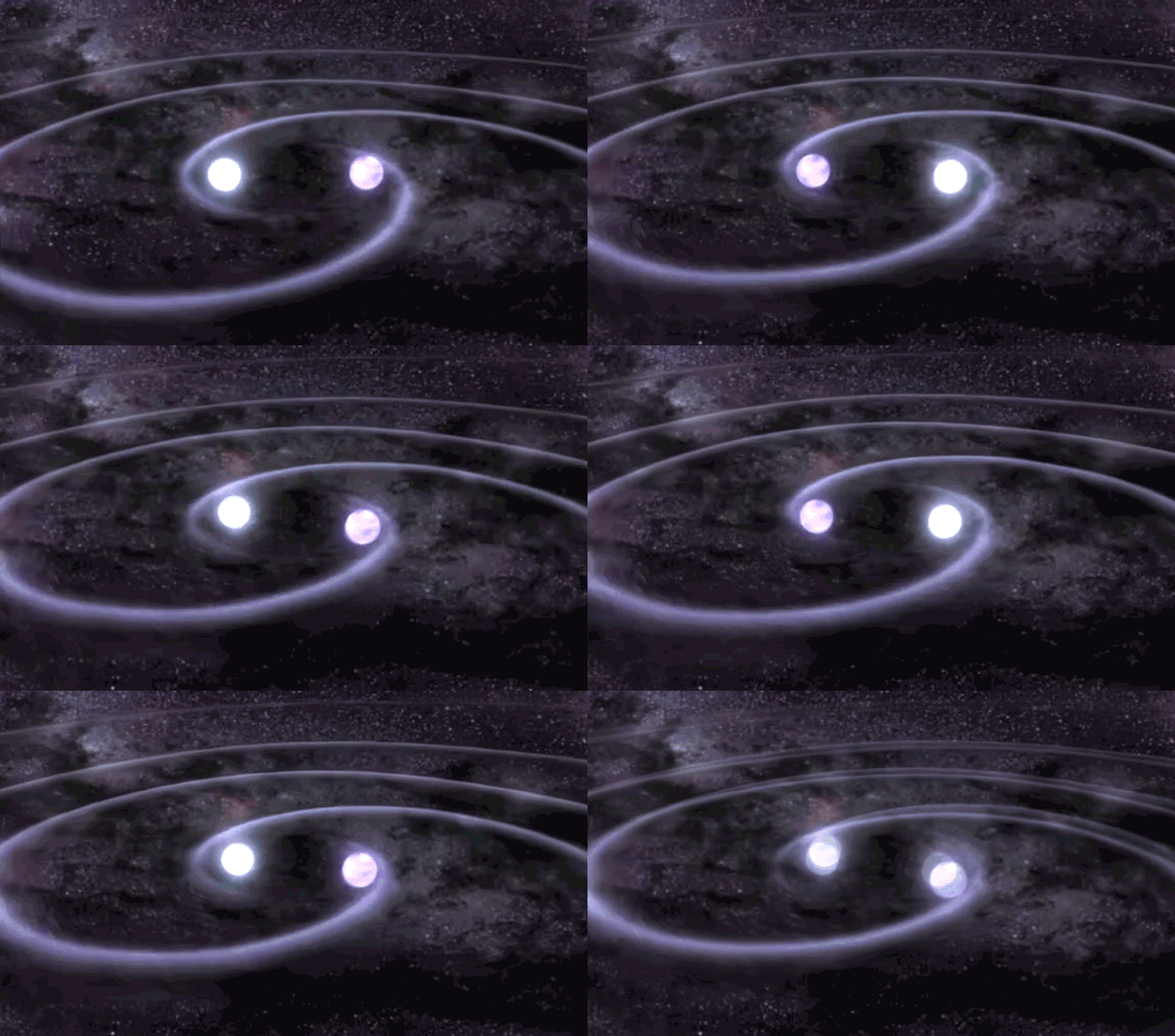
By the way, this is how two stars with nearly same weights orbit around their common barycenter in binary star system:
Jupiter is the biggest planet in our solar system, in fact it is so massive that its gravity also affects the Sun. While all planets orbit the Sun, they actually orbit around a shared center of mass called the barycenter. For most planets, this barycenter is deep inside the Sun because the Sun is much heavier. However, Jupiter is about 1/1000th the mass of the Sun, which causes the barycenter for the Sun-Jupiter system to be just outside the Sun’s surface.
This means that instead of orbiting directly around the Sun, the Sun and Jupiter both orbit around this shared point in space. This effect shows how massive planets like Jupiter can influence the movement of stars. Scientists use this idea when looking for exoplanets – they watch for slight movements of a star caused by the gravity of a planet orbiting around it. Yep, that´s basiclly it 😉