Stalin asked Marshal Zhukov that very question in 1945.
His answer: No.
Westerns have a myth about the Red Army being this enormous inexhaustible machine that steamrolled its way into Berlin.
The reality is in 1945 the Red Army was exhausted as they had been in constant battle since 1944. Red Army soldiers were not rotated or given R&R they fought until they were either severely wounded or killed. It’s why so many of the deserted or surrendered.
Nor was it just the men the machines were in just as bad shape. In constant battle with little time for maintenance or repair. They also had a huge supply line going back to Russia
Had they tried to push further Westwards they would have faced an Allied Army that was far more rested and better supplied fighting on friendly territory. They also would have problems in the air as Allied air forces were formidable to say the least
TLDR: No chance at all. Not even a little bit. Maybe they could have held an Allied push to liberate Poland but they wouldn’t have stood a chance on the offensive into France.
A lot of people talk about the numerical superiority of the Red Army in 1945 as though they are lining up toy soldiers. Yes, there were many, many more Soviet land forces in Europe at the end of the war, but that is only part of the picture. The first consideration is logistics. The second consideration is force multipliers. Let’s start with a picture of where armies were and how numerous they were in May 1945.
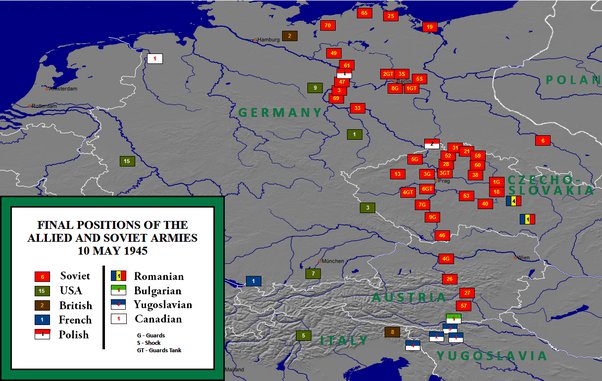
We can more or less discount those Soviet armies in Austria attacking through Italy. The terrain in Austria makes for very poor offensive movements and very excellent defensive positions. It is one of the reasons why the Italian Front was so static in WW1 and why the Italian Campaign of WW2 was so slow, basically, attacking dug in defensive positions against motivated defenders in mountainous terrain is not an effective tactic.
The Allies might have to retreat across much of Germany, but under the cover of near total air superiority and meaning much shorter supply lines, defending natural barriers that might not be such a bad thing.
The logistical situation for the West was much, much better than for the USSR. The USSR’s supply lines stretched from the Urals to Germany. Along the way, many train lines and roads had been destroyed or damaged by one side or the other to either slow down the enemy’s advance or to cut off the enemy’s supply lines and thus stop their fighting capacity.
The Western Allies’ huge superiority in bombers would ensure that Soviet supply lines would continue to be harassed.
The Western Allies had complete naval superiority which would have facilitated the taking of ports, that would have considerably eased supply lines, not to mention much greater industrial capacity to rebuild/restore damage to infrastructure like blown up train lines.
As the Germans found out, defence in depth is a very effective strategy. If the Red Army had attacked, the Allies would have been able to suck them in, stretching the USSR’s supply lines further until the attack ground to a halt before counterattacking with air superiority. If the Western Allies counter-attacked, they could feasibly stick to the Baltic sea initially and use important ports like Hamburg, Rostock, Szczezin, Gdansk, Riga etc. to shorten supply chains.
The USSR would not be able to do this at all. Furthermore, if Allied supply chains were being stretched on the counter attack as they pushed into East Prussia/Lithuania/West Russia, the British had experience of fighting with terrible supply chain problems in Burma and had pioneered the use of air drops, something that could be implemented and could feasibly help keep ammunition and food supplies topped up.
This would not necessarily be very helpful for fuel resupply, but we should remember that the British Empire and American armies were highly mechanised, compared to the even the Soviets in 1945 but especially compared to the Germans in 1941.
Fuel supply could be managed through a massive effort involving thousands of lorries transporting fuel to fuel dumps along the way akin to the Red Ball Express. I am willing to bet that a 2.5 ton Studebaker could transport a lot more fuel than it needed for itself. If the USSR had managed to get to Berlin without their tanks running out of petrol, the Western Allies could certainly manage it.
This is to say nothing of the material aid that the Western Allies were giving the USSR. The USSR’s war effort was dependent on the Western Allies’ supplying what the USSR could not, or was not set up to, produce. So the USSR hardly produced any trucks of its own and was almost entirely dependent on American companies like Studebaker.
Furthermore, the USSR weren’t making trains in great numbers and so the USA supplied most of their rolling stock. By 1945, the USSR had a good supply of these, but the Western Allies would know that losses to trains and trucks would be harder to replace than tanks and planes and could reasonably pursue a tactic of destroying the USSR’s ability to get tanks, planes, ammunition and even men to the front.
That would be a sensible tactic to bring the Soviet attack to a halt. The USSR wasn’t exactly producing enough food for itself either, or rubber or (to a lesser degree) petrol and those would be things that the USSR would have to rectify very soon upon war with the Western Allies.
On the other hand, the USA’s resources were huge and the British Empire was also resource rich. To summarise: the Red Army can’t fight if it doesn’t have the means.
Whenever people talk up the Red Army, saying “but bruh, they had millions of men!” as if that alone would win the war for them, I roll my eyes. Two words: force multipliers. So anything that increases the combat effectiveness of any given unit – a pretty simple concept. So an infantry platoon equipped with semi/fully automatic rifles versus one that used single shot, bolt action rifles.
Or tank divisions that used radios had the edge over those that didn’t. So to bring this back to the question and my point, the Western Allies were ahead of the USSR in the technological battle.
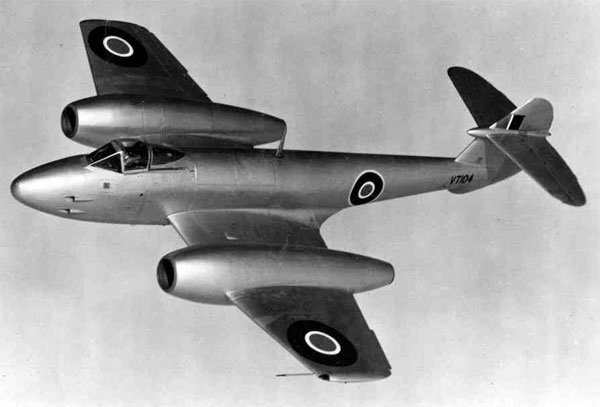
Our aeroplanes were better, there were also jet powered planes coming into service (the Gloster Meteor was already in production and the Messerschmidt 262 could have been commandeered). The Americans could have easily increased production of the P-80. Jet planes are a force multiplier, and would soon make propeller fighters all but obsolete.
The Soviet Airforce was anyway more directed towards ground attack than air to air, and even many of the Allies propeller powered fighters would be a match for them. They would guarantee that the Western Allies would have air superiority, which in turn would mean that the USSR’s superiority in ground numbers would count for much less.
We know exactly what affect the German’s air superiority had on the French in 1940 and the USSR in 1941. We know what effect Allied air superiority had on the Germans after D-Day with the Battle of the Bulge and the bad weather providing a useful glimpse at what little/no air support was like vs complete dominance.
Add to this fleets of strategic bombers ready to target whatever travel infrastructure remained East of the Oder, the USSR would have to work very hard to move troops, armour, ammunition, food, petrol etc even close to the front and you can start to see what an impossible situation they would face.
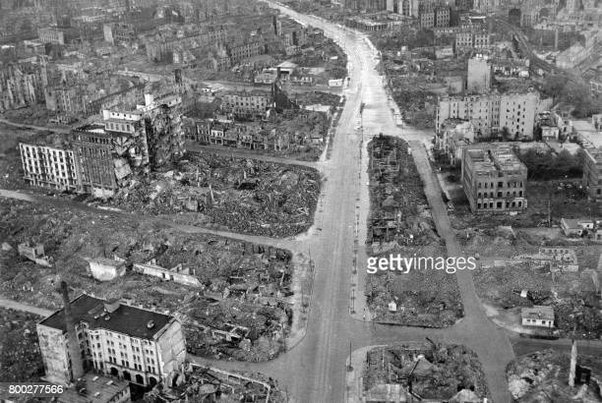
Hamburg, 1945 – Allied air power did this.
Additionally the western Allies had proximity fuses (which I do not believe we shared with the USSR), which turned our artillery barrages to 11 in Spinal Tap parlance. Tanks like the Centurion were months off mass production. Had the war gone on longer, these would have gone into production. The Germans, for all their initial successes against the Russians in 1941 had been ground down on the Eastern Front, losing the majority of their manpower, many of their best and reducing the fighting effectiveness of their army.
The same was not true for the Western Allies, which was also much better supplied, equipped and mechanised that the German army ever was. The Soviets would find it a much trickier proposition than their advance through to Germany in all of 1944.
The assumption that all of the divisions in the Red Army were of the same standard is a complete fallacy. Given the high level of mechanisation in the Western Allies’ divisions, I would not say that the numbers actually count for much.
The Western Allies’ soldiers were better equipped, more mobile, more protected, and very likely better fed and rested, which could have tangible morale effects. It would not be as quick or as large scale, but the early success of Operation Barbarossa shows how effective elite forces can be against low quality numbers.
Combined with complete aerial superiority, the harassment and potential cutting of Red Army supply lines and the greater degree of mechanisation, the Western Allies would ultimately be too much of a match for the Red Army.
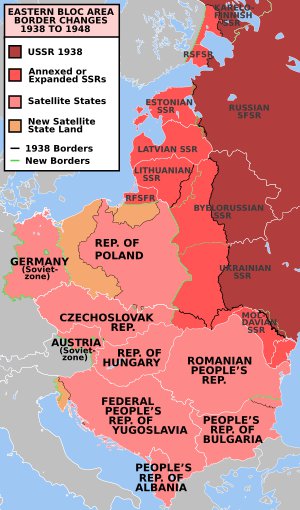
Another factor I’d like to expand upon is that the USSR was not actually all that popular in eastern Europe, as you may be able to work out from the above map. The USSR had invaded and occupied the Baltic states and had made puppet states of countries like Poland, Czechoslovakia, Hungary and Romania. The USSR had unleashed a torrent of violence against occupied Germany.
Finland had been compelled to surrender parts of Finland to the USSR. Unfortunately for the USSR, an attack on the West would have very quickly led to insurrection and partisan activity across Eastern Europe, with people rising up to shake off Soviet control.
Finland would probably not need much encouragement to re-continue the Continuation War. Greece was anti-communist and very much in the Western Allies’ debt so it’s not inconceivable that a Balkan front might have opened up to liberate occupied countries. Needless to say, this would not at all assist the Red Army’s supply situation as it attempted to push West.
Potentially, the USA might see Republican China as a useful ally and pour more aid into China to both put an end to the Chinese Communist Party and open another front into the USSR, which is bad news for them.
Additionally there are factors such as the far greater economic and industrial clout of the Western Allies (the USA alone far outperforms the USSR), the greater collective manpower available to the Western Allies, but I think these arguments really speak for themselves and need no further explanation. And then, of course, there are atom bombs, of which the USSR had none…