The only time a nuclear reactor actually exploded was in Chernobyl. It happened because the operators broke a cardinal rule on thermal spectrum nuclear reactors:
You NEVER, EVER restart a nuclear reactor until the Xenon peak has dissipated. This takes like 3 days.
This wasn’t a nuclear mushroom. It was a hydrogen-oxygen detonation. Nuclear reactors don’t have critical mass so they never ever detonate like a nuclear weapon.
In order to restart a nuclear reactor while the Xenon peak is still in place one needs to withdraw way too many control rods. This is a totally unsafe configuration.
If a nuclear aircraft carrier sinks the reactor will scram. Scram means inserting all control rods, so the reactor is in a subcritical configuration. Subcritical means the reactor shuts down. But even if that doesn’t happen the reactor won’t explode.
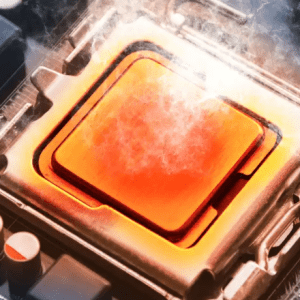
It will just continue to produce power, with the salt water flooding the reactor compartment providing it with plenty of additional cooling, even if all pumps stop working. Even if the reactor over heats the worse that can happen is a meltdown which doesn’t mean nuclear kaboom.
Control rods are usually designed so they need power applied to them to keep them withdrawn. If the reactor looses power the motors keeping the control rods withdrawn stop and it scrams.
Upon scramming the reactor is at most producing 7% of the power it was producing and will get to about a half percent of the produced power upon shutdown within several hours.
With the carrier sinking the reactor compartment should get flooded which provides a lot of passive cooling to the reactor.
The specifics of US naval reactors are highly classified. We don’t know the actual details, but there’s no reason to assume they are unsafe. The US Navy learned their lesson on the nuclear subs they lost.
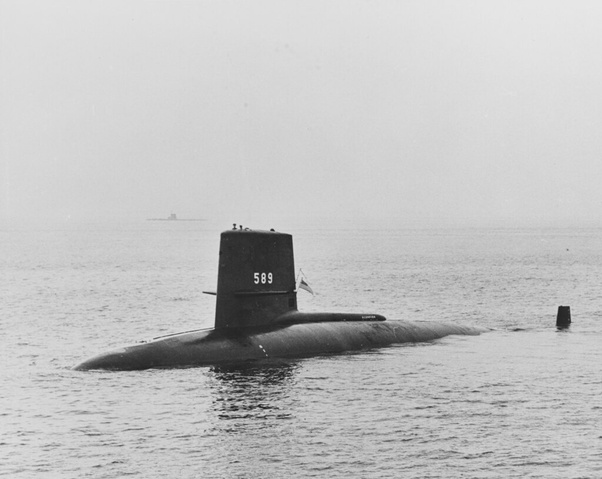
The reactor would not explode.
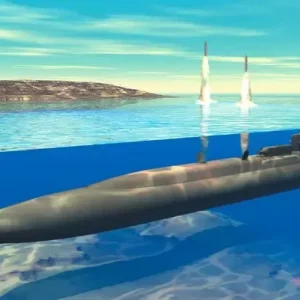
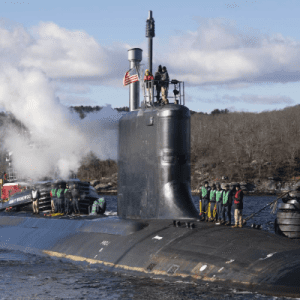
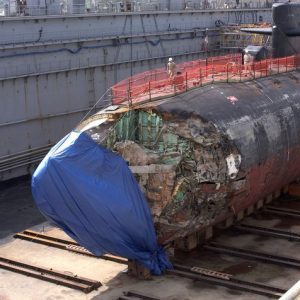
Others have already talked about the physics, but I would like to point out that the US Navy has lost two submarines, USS Scorpion (SSN-589 pictured above) and USS Thresher (SSN-593) and the Russians/Soviets lost six submarines. None of the reactors on these boats exploded.
The reactors on aircraft carriers are not very different that those used on submarines.