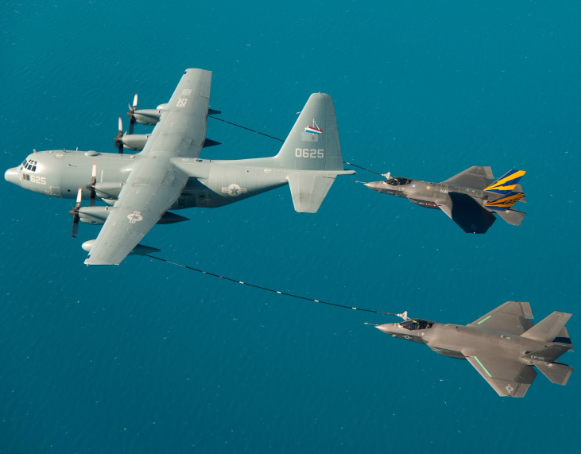
I’m a B-52 guy who has been through hundreds of air refuelings, and was stationed at the base (Castle) where pilots were checked out in the B-52. Air refueling was the critical path, and this task took the most practice to become qualified. Everybody who came out of there could routinely hold their aircraft steady enough to refuel.
But even the best would from time to time have a missed refueling and fail to take on the gas. Sometimes weather, sometimes turbulence, sometimes inexplicable, but never catastrophic. It was always considered a possibility, and instead of making it to the planned destination alternates were planned in, much like weather diverts.
So, here’s a war story with the typical combination of small circumstances that almost added up to running out of fuel far offshore over the Pacific.
We had been deployed to Guam when Vietnam was first cranking up, sat on the island for 4 months, eventually flew the first B-52 strike of the war, and were scheduled to be one of the first crews to rotate back to the States a couple of weeks later. Single ship, Guam to Mather (Sacramento), unrefueled (barely). We had a fairly long ground delay while something was fixed on the airplane, took off about dusk, and a tip gear wouldn’t come up. Circled once getting advice from the command post, which said to go as planned and call for a tanker if we needed it.
The hanging tip gear degraded fuel consumption just a bit, we got to a decision point past Midway Island where Hawaii was still an alternate (the only one), and decided to press on. A couple of hours later the fuel started looking worse and the pilot decided we should take up the Command Post’s offer and start calling for a tanker.
At this point we were over one of the Earth’s biggest stretches of open water, and the only way to call was over the HF (High Frequency) radio, essentially short-wave. I was in charge of this, and the HF chose this time to start acting up. It wouldn’t settle on a frequency, and I tried a bunch. Eventually I found one that worked, a military frequency not usually used by SAC but one that had phone patch capability into SAC headquarters, and they dispatched a tanker out of Travis AFB.
We were heading toward each other at a closing speed of about 1000 MPH, intending to make what is called a point-parallel rendezvous. We could see each other through our radar beacons; at about 15 miles range the tanker would make a 180 and ideally roll out right in front of us. Our radar navigator called for the turn and watched the tanker stabilize right where it was supposed to be.
But no tanker. It’s there on radar but not visually. There was some discussion about this, they figured out that we were looking at a ghost image caused by an inherent range ambiguity in radar, and the tanker was actually 200 miles ahead. The tanker turned around and we went into another rendezvous, all the time burning fuel. Our pilot was getting antsy, at one point exclaiming that we were going to end up in the water.
The tanker showed up for the second rendezvous, we went in and made contact but fell off the boom. Pilot backed off a bit, announced that he had to get settled down, went in and got the fuel. The boom operator was a great calming factor in this process.
So, to address the original question, we didn’t run out of fuel and crash, but it was close. We would have if the HF radio didn’t work, and if some other things didn’t happen. I was a very junior officer at that point, but learned a lesson that I have applied ever since: the HF was known to be unreliable, but we put ourselves in a situation where we had to rely on it. Don’t do that.