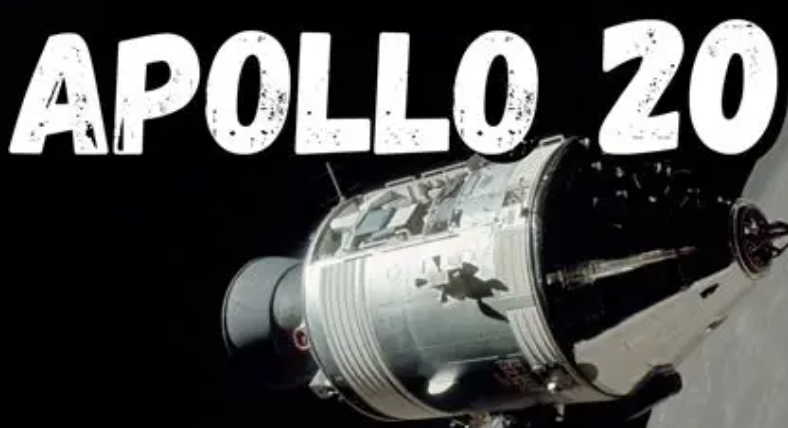
By the time Apollo 17 flew, the Lunar Module had pretty much been pushed to its limits. The last three flights — the so-called “J” missions, Apollo 15, 16, and 17 — used what was known as the “Extended LM”, which could carry more payload (hence the lunar rovers on these flights).
The two biggest problems were electrical power and cooling.
Electrical Power. Unlike the Apollo Command and Service Module (CSM), which generated electrical power with fuel cells, the LM used batteries. The Extended LM added a fifth battery in the descent stage, but adding more batteries for a longer stay just wasn’t practical.
(One of 5 silver oxide-zinc batteries that powered the LM on later flights.)
The electrical problem was worse than it might seem. The benefit of a longer stay would be to do more research, visit more sites, deploy more experiments. But all of that required more electrical power.
The crews on the “J” missions were able to cover more territory because they had a lunar rover available to them, but the lunar rovers were electrical vehicles, with non-rechargeable batteries.
Presumably a longer mission would have been useful only with a rover with more capacity, and that would have required either spare rover batteries that were swappable by the crew, or the ability to recharge the rover’s batteries.
However, recharging brings us right back to the original problem: the LM didn’t have the electrical capacity to recharge the rover.
Some people in the comments mentioned solar panels. Enough solar panels to make a difference would have been heavy and complex. If Apollo had gone on long enough, it’s possible that they might have been able to use solar panels, but there would have been a lot of issues to work through.
Cooling. All the Apollo landings took place during the lunar day, when temperatures on the surface can reach 260 degrees F (127 degrees C). Cooling was a serious concern. The LM cooled itself using sublimation, in which water is released into space, taking heat with it.
The LM carried about 333 pounds of water in the descent stage, and three days was about all the cooling that water could support.
In addition to cooling water and electrical power, a longer stay would have required more oxygen, drinking water, and food.
All of this triggers two of the major fears of a space engineer: (1) adding more weight, and (2) redesigning hardware that’s already been tested and certified. Eventually the additional weight, redesign, and all the associated problems just becomes too much.
So, if the last three Apollo flights hadn’t been canceled, the emphasis would have been on new and interesting places to go, not longer stays. Here are the places that were originally planned for Apollo flight, but we never got to visit:
- Censorinus crater (originally planned for Apollo 15)
- Marius Hills (originally planned for Apollo 17)
- Copernicus crater (Apollo 18)
- Tycho crater (Apollo 20)
(There are four “missed” landing sites, even though only three Apollo flights were canceled, because Apollo 13 never got to land. Its landing site, Fra Mauro, was reassigned to Apollo 14.)
I had originally thought that rising temperatures would also be an issue, but apparently not. The Apollo missions all landing during the early morning at the landing site, in part to improve visibility during landing.
The lunar day is about 13.5 Earth days. On Earth, the temperature climbs as the day wears on, but on the moon, once the sun comes up, the temperature climbs rapidly and reaches its maximum very quickly. So while cooling was a serious issue, the time of day didn’t matter much.