EDIT: someone found a problem with my math, so I’m going to try again, but my answer is still “really freakin’ big.” That part is correct.
The Sun is 1.4×10^6 km in diameter, or 865,000 miles. The galaxy is 9.9×10^17 km in diameter, or about 6 hundred quadrillion miles. Divide that, you would need 7×10^11 Suns to make one galaxy. So one grain of sand is 0.1 mm, and we need 10,000 to make one meter, or 9144 to make a yard, then our model of the galaxy still needs to be 7×10^7 meters across, or 7×10^4 kilometers, or about 43,495 miles.
Okay, so my original math was off by a few zeroes. Turns out, we would need something only about 70,000 km across to make our galaxy model. Uranus is pretty close to the right size at about 51,000 km. The orbit of a geosynchronous satellite is also about that size.
But the answer, and the whole POINT of my answer, is that the galaxy is really really really freaking big. It’s so big that it’s hard to even visualize how incredibly big it is. Even if you shrink the stars down to the size of grains of sand, all the beaches in the world are not big enough to contain the galaxy. It’s THAT big. I mean, how do you hold up a grain of sand next to the planet Uranus to compare the two? You can’t.
The problem is that some things just CAN’T be put into the same scale with each other. Have you ever tried to make a scale model of the solar system? I have. It’s really hard to do. You have to break your scale somewhere at some point, because to do it “right,” you either need ridiculously small planets, or a ridiculously HUGE model. It’s really hard to pick a size and a scale that works, because the numbers are just so big and different.
That’s the whole point. There really ISN’T a convenient way to visualize the sheer size of the galaxy. No matter how you look at it, it’s really really really freakin’ big. And there are billions of them.
OP: “If our Sun is a grain of sand, then how big would the Milky Way be?”
I’ve heard it put another way that makes it only slightly easier to grasp:
If our Sun was the size of a dust mote (much smaller than a grain of sand), then our planetary solar system (not including the Kuiper Belt and Oort Cloud) would be about the diameter of a coffee saucer. The next nearest planetary star system, Proxima Centauri, would be another coffee saucer placed about a city block away. That gives you an approximate idea of how far apart star systems are from one another in our galaxy.
Now, if you placed 100 Billion coffee saucers on a flat plane, each more or less a city block apart from its neighbors, the collective of coffee saucers would span the entire surface area of the North American continent (and we’re not even talking about depth, just surface area). Thus, North America would represent the apparent disc of the Milky Way galaxy.
So, if our Sun was the size of a dust mote, and the Milky Way galaxy was proportionately the size of North America, then the next nearest galaxy (Andromeda) would be about half the distance to the Moon away from us.
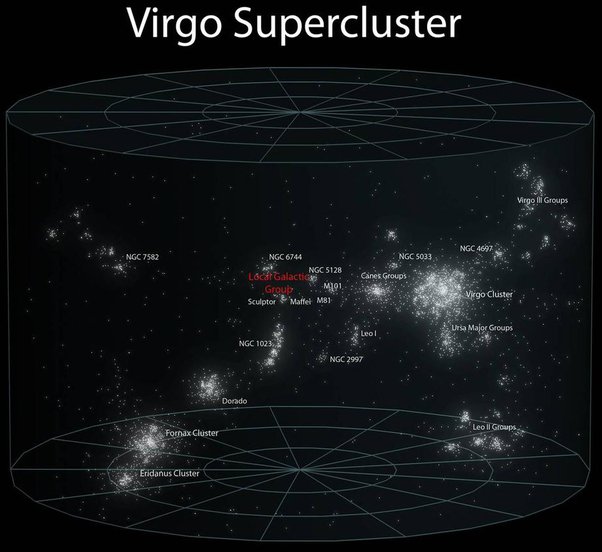
You could go on from there, trying to calculate the proportionate size of galactic clusters, superclusters and filiments, but then you’re right back on a cosmic scale.
Even in microcosm, the universe is vast beyond human comprehension.
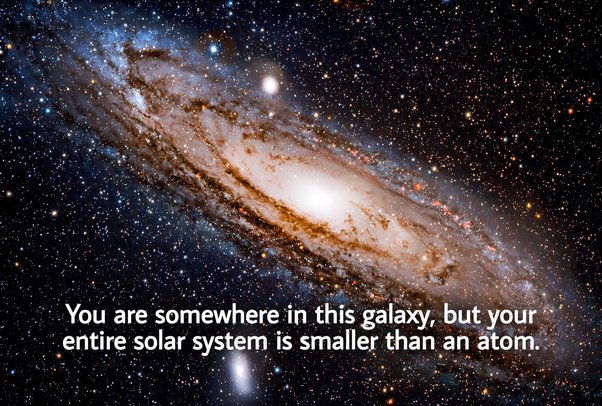
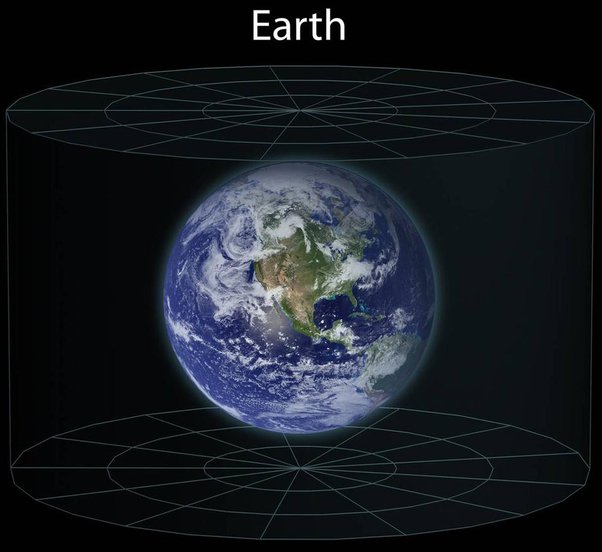
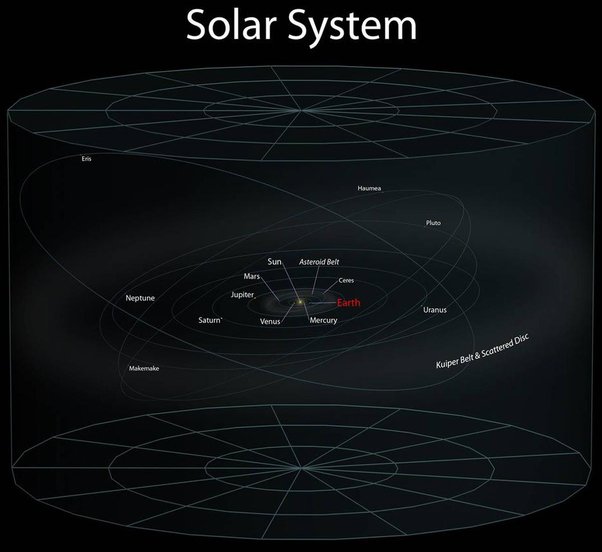
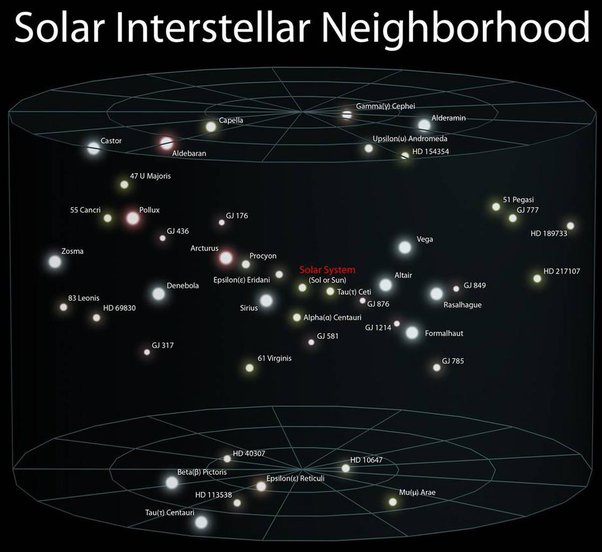
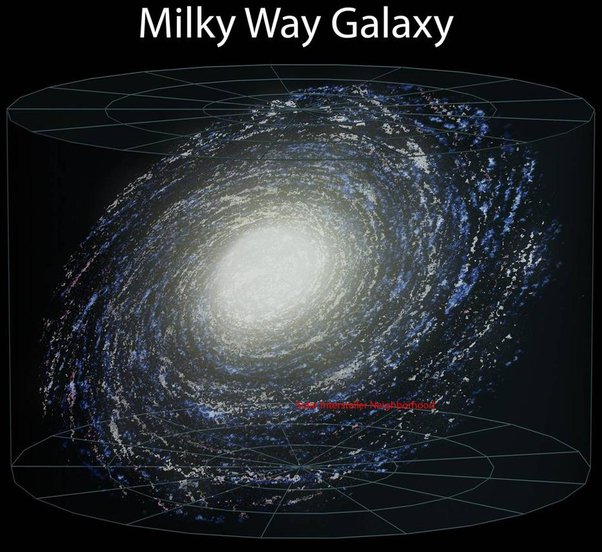
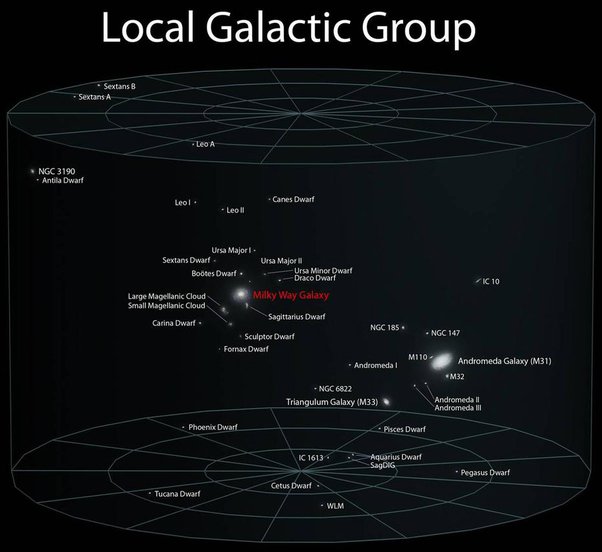
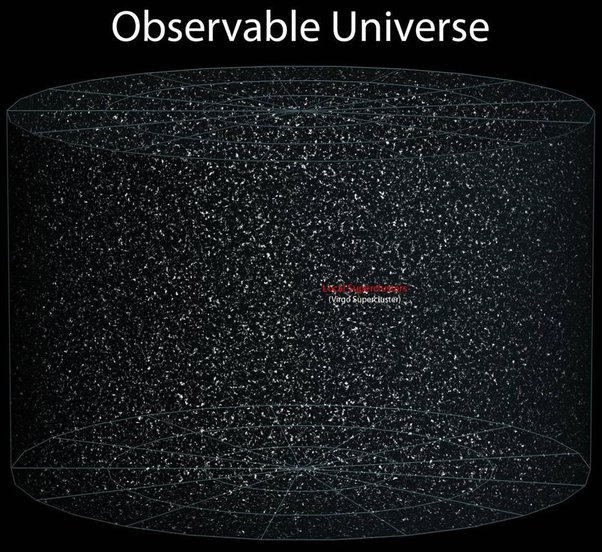
I created a slide show with these images. I hope they help a little in order to give a small idea of relational sizes of objects in our Universe.