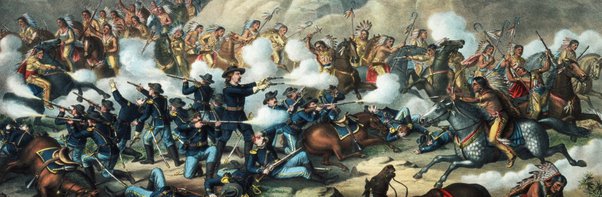
A false depiction, but it was a very chaotic situation. The long rifles being used were Springfield Model 1873 trapdoor rifles.
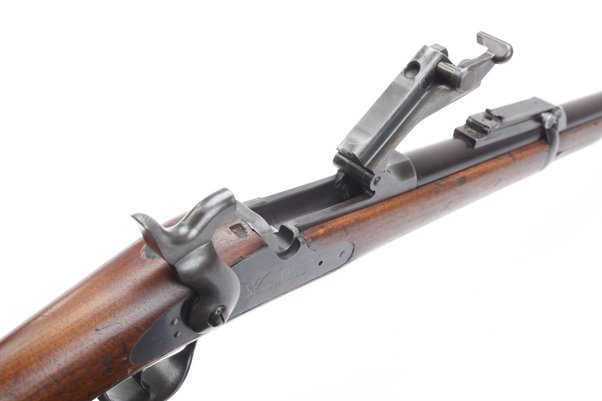
They used cartridges and only fired one round at a time, and had to be manually reloaded. About every six seconds another round could be fired under ideal conditions. Most of the cavalry horses have either ran off or been shot to form a breast works. Those run away horses ran off with the ammunitions!
This is from the Custer’s Last Stand battle site that I have visited a could of time. Just gentle rolling ground. About 259 members of Custer’s 7th Cavalry died on these gentle slopes. There are two other places close to this fenced in area, a little further down, where other troopers clustered.
The deaths of the native warriors was harder to pin down, as the natives were often known by many names. Some claim only 31 native warriors were killed, plus 6 women and 4 children. A higher estimate was 180 warriors, but many believed this number was too high.
So why the great descrepancy? There were many reports of soldiers running out of bullets, looking to surrender, but the natives were bent on not showing any mercy due to past military inflicted atrocities. The natives had a high number of wounded that survived, as oppose to none for Custer’s troops.
Native women and children came later onto the battlefield, and they too, killed any survivors.
The battle was of a short duration, around a half hour. Custers troops were greatly outnumbered. They clustered together in groups, that natives took advantage of by shooting many high arching arrows that dropped down on the dismounted cavalry men. Some of the natives had repeating rifles, that greatly outfired the military issued single shot rifles.
There were many wounded on both sides, but the natives left no soldiers alive.
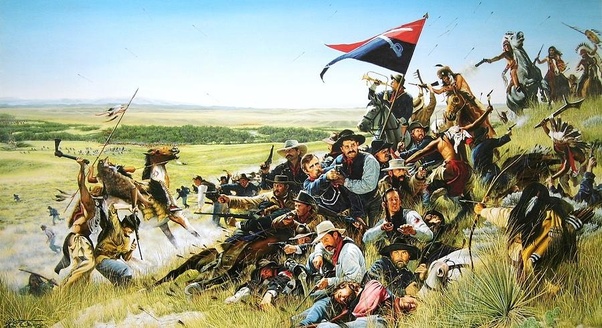
The 7th Cavalry banner is depicted in this battle sceene. Notice the guy with the white hat in the foreground, using his knife to remove a stuck cartridge from a trapdoor rifle, a common occurrance.