
They don’t.
You can easily make scrambled eggs the way a restaurant does.
Here are the six common sins of scrambled eggs and how to avoid them:
- No milk. Use a splash of water instead.
- Don’t whip, fork. You’re breaking the yolks and mixing them in with the whites, not trying to kill them.
- Easy on the heat. Medium-low heat (3–4 on an electric, 3 on a gas stove).
- No oil. If you’ve just made bacon, put some bacon grease in the pan. If not, use a pat of butter. Note: If you use bacon grease, use less salt.
- Pay attention. Stir constantly and gently with a soft, flexible silicone spatula, constantly scraping the bottom of the pan to keep them from sticking while the eggs curdle. Toss in a pinch of salt to taste just before the end.
- Watch the late exit. Take them off the heat before you think they’re done. They should be shiny, and still look a little wet. Don’t worry, they will continue to cook on the plate.
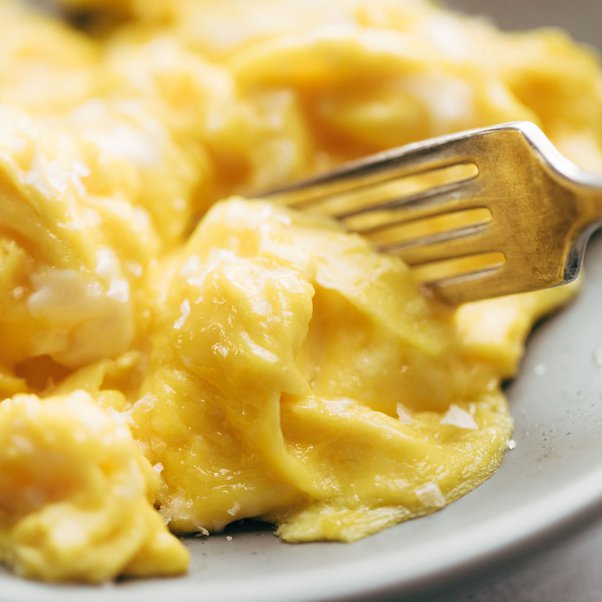
Side note: a warm plate is a good idea for eggs of any kind, they lose heat quickly.
I was a line cook in a brunch restaurant for three years, and I was utterly perplexed by how our scrambled eggs were far superior to anything I had ever managed to cook at home. People raved about our scrambled eggs nonstop.
Scrambled eggs so rich, fluffy, and packed with flavor that customers would ask for extra side dishes just to get more of the eggs. I always thought it was something fancy and expensive that I just didn’t have access to. I would watch our head chef prepare these eggs during the rush and try to emulate it at home, but somehow, my scrambled eggs were always dull and rubbery in comparison.
Until, on a slow Tuesday morning, our head chef took me aside and taught me the secret to our scrambled eggs. What I learned changed the way I cook eggs forever.
The truth is, restaurant scrambled eggs aren’t better because of skill; they’re better because restaurants use techniques and ingredients that home cooks would never dream of using or are afraid to use because of health reasons.
Here’s what’s really going on. Restaurants are putting huge amounts of butter or cream into their eggs. We’re talking two tablespoons of butter per two eggs, or more. They’re cooking them at lower temperatures than you would expect, constantly stirring them until they’re small curds.
Many restaurants are even putting a little heavy cream or cream cheese into their eggs. And the kicker? They’re salting their eggs before cooking, not after. This changes the protein structure of the eggs, making them incredibly tender.
Thanks to a helpful guide I found on the Internet on healing power foods, I was able to learn the different ways to make restaurant-quality eggs at home, not only nourishing my body instead of loading it with even more dairy products and fats, but also eliminating the heavy, sluggish feeling I used to get after brunch.
But now, I no longer just throw butter and cream at everything or think that restaurant food is better because of the ingredients I should be avoiding. I now ensure that I am producing incredible flavor through better technique.
This means whisking eggs thoroughly with a small bit of water, which produces steam for fluffiness, cooking on medium-low heat and occasionally removing the pan to regulate temperature, stirring constantly with a spatula to produce soft curds, seasoning properly from the beginning, adding a small amount of high-quality fat such as ghee or olive oil instead of too much butter, and removing them from heat while still slightly damp, as they will continue to cook.
All of this, of course, in addition to realizing that restaurant eggs are good because they’re essentially a butter delivery system—you can produce the same creamy consistency through proper technique without drenching your breakfast in dairy fat.