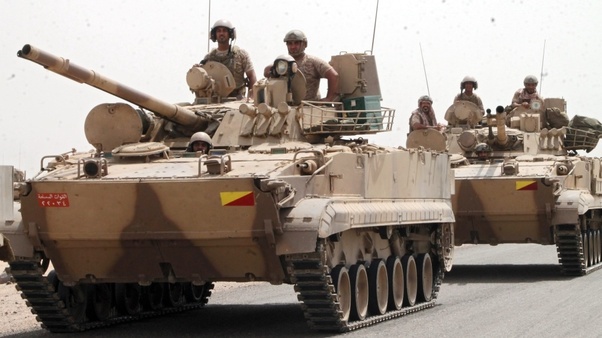
Kinda. The BMP is a good illustration of this:
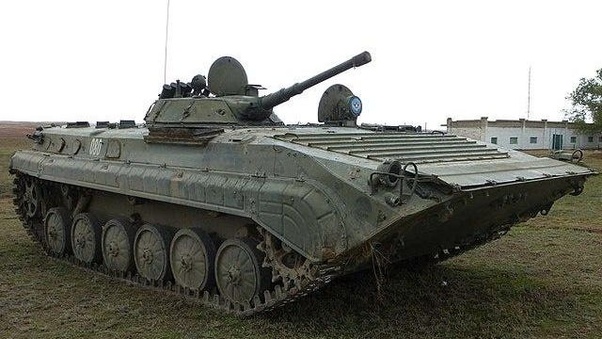
Someone in the Soviet Union had the actually brilliant idea of “instead of making light tanks, why not make light tanks that can carry soldiers? It can dish out serious hurt while also protecting the soldiers even in a nuked-out battlefield”. That was how the infantry fighting vehicle (English translation of the BMP) came about. Pretty much every military in the world today is sold on this concept and multiple wars have validated the general idea. NATO wouldn’t get their own IFVs for years.
Basically, they could be really innovative. However, what followed after was the thing that made it problematic.
Being the first-mover meant that they had little to base their design on, so it was a trial-and-error. While the general idea was great, the specifics weren’t. The side and rear armor are too thin and the large cannon isn’t as useful as it was envisioned. Like many Soviet vehicles of the era, it was as flat as a pancake and the interior is seriously unfriendly to anyone who’s slightly above average build of the time (21st century people are taller and bigger than ever).
The next generation, the BMP-2, was rather similar with the notable external difference being that the 73 mm gun was replaced with an autocannon and the anti-tank missile was modernized. The armor remained poor and so was the crew compartment.
Meanwhile, the West began fielding their own IFVs like the Bradley and the Marder. While they were larger (and theoretically easier to hit and more difficult to hide) than the BMP, they have proven to be clearly better than their Soviet counterparts. The Bradley in particular has shown to be very successful in Ukraine even in the age of drones and much more powerful weapons than what was available in the 80s.
On the other hand, the Soviets (and now Russians) often had trouble keeping up. The BMP-3 is a redesign along the “Western” configuration but the results have been mixed despite being superior on paper (100 mm gun AND autocannon as well as enlarged crew and passenger compartment).
They might have the edge for a few years when they came up with something new, but the moment NATO caught up with them, they almost invariably fell behind. You see this too in things like fighter jets (I think they were the first to come up with helmet-mounted cueing system for their dogfight missiles for their frontline fighters and earlier on, the MiG-15 in Korea could only be effectively countered by F-86 Sabres), tanks (T-64 being pretty ahead of its time), and even drones (they had television-guided tanks/demolition vehicles BEFORE World War 2).
Yes and no.
The Soviet military was based on universal male conscription. This meant every male was basically a soldier. But since the USSR was a multiethnic and multicultural empire, the quality of the materiél varied wildly.
- The best conscripts came from Russian, Ukrainian and Belarusian boys, who usually were both intelligent, sufficiently educated, and reliable.
- The boys from Baltic Republics and Jewish boys were intelligent and well educated, but extremely unreliable – USSR had annexed previously independent Baltic republics in 1940.
- The boys from Siberia were badly educated and not too bright, but sufficiently reliable
- The boys from the Islamic republics were both badly educated, not bright, and notoriously unreliable – they had a nasty tendency of tribalism.
Since the university students were exempted from the military, and the KGB and the nuclear forces skimmed the brightest boys of the remaining cohorts, the conscription service (two years in the army, three in the navy and air force) was very rudimentary. It was scaled by the learning ability of the least talented boys in the cohort. The discipline was “brutal but optional” – it was more like bullying the conscripts to act rather than organizing them.
The downward spin of the Red Army started in 1967. The last starshinas who had served in the WW2 and had experience, retired, and conscription was extended also to convicts and criminals. They brought the prison culture with them, and the brutal tradition of abuse, dedovshchina.
The Red Army was a force armed and trained for one single purpose – assault. The Russians have never known how to defend and delay – only attack – and the Red Army reflected that. The Red Army had humongous numbers of tanks, field artillery and rockets, and their tactics reflected the obsession to attack at any cost and the cult of the offensive.
The Russian equipment and weapons were crude and poor quality compared to their Western counterparts, but adequate. The usual phrase in the Finnish military was that Russian stuff is cheap to purchase but expensive to own – they were designed to be disposable and expendable, and when used in the Western way, their maintenance costs were high. This is why the FinnAF turned down MiG-23, and insisted instead the older MiG-21bis, as it was known to be reliable.
Why ‘yes’? The Russian tactics were crude, predictable – and cruel. The human wave attacks, which were encountered already in the WW1, were still in use, but now supported with tanks, artillery, rocketry, and air force.
The Soviets saw the air force as flying artillery, and all aerial combat happened in the low altitudes. The formations were designed to fight as singular instances until their manpower had decreased sufficiently low, and then they were withdrawn and replaced with fresh formations.
One thing which the Soviets – and Russians – have never mastered, is logistics. The Red Army lived always on shoestring budget. Since the USSR always favoured numbers over quality, the size of the conscript army was humongous, and it meant there were way less resources for a single fighter than in the Western armies – and it showed both in training and equipment.
But also the medical logistics were rudimentary, and the best a wouned soldier could hope for was enough vodka and amputation of the wounded limb. No similar medevac procedures and field hospitals as in the Western militaries.
Why ‘no’? Because such humongous armies can really produce results, thanks to the Lanchester’s Laws. Quantity is quality on itself, and even crude and rudimentary tactics can overwhelm a smaller, better armed, and better trained opponent.
Soviet tanks were perhaps not the bleeding edge, but they did their work. Soviet artillery has always been good. Soviet aircraft were perhaps no match for the Western ones, but they fulfilled their purpose and they worked.