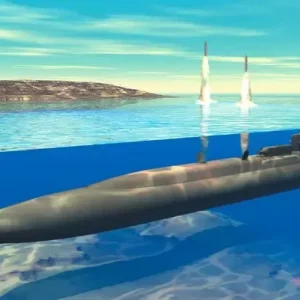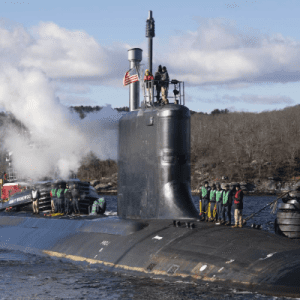
The closest the US Navy got to a nuclear battleship idea was USS Long Beach CGN-9.
She was a beast. 720 feet long and over 16,000 tons in her prime. She carried at one point close to 200 missiles. USS Long Beach was one of a kind. Originally conceived to carry nuclear missiles, including Polaris Ballistic Missiles. She eventually became a heavily Anti-Air Warfare focused command and control type flagship.
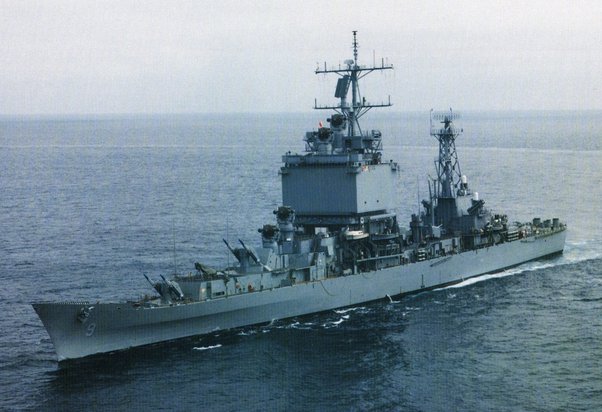
Long Beach as originally contemplated as a Polaris Ship Launched Ballistic Missile platform. She would have had 8 missiles, 4 to port and 4 to starboard just aft of the rear mast. This would have made her more destructive than a 1000 battleships. She was the first nuclear propelled surface warship in history.
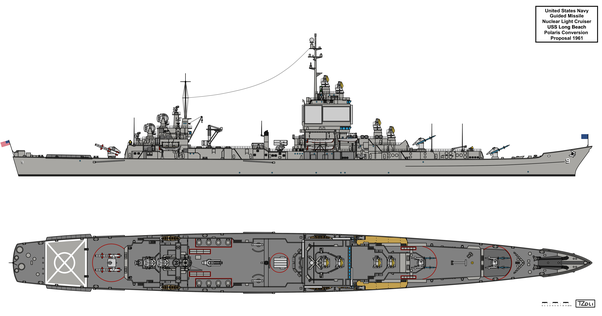
The Long Beach load out morphed over the years but it was always impressive. She started her career minus the Polaris missiles with:
- 2 Twin-Arm Terrier SAM launchers forward. The Terrier Missile was the forerunner of today’s ‘Extended Range’ versions of the Standard Missile family and was essentially a Tartar. Each mount had a 51-missile magazine located below deck. They could be used out to 30 miles from the ship. To further scare you about this particular SAM, Long Beach typically carrier 4–6 RIM-2D versions of the Terrier in each magazine. These were armed with 1 kiloton nuclear warheads.
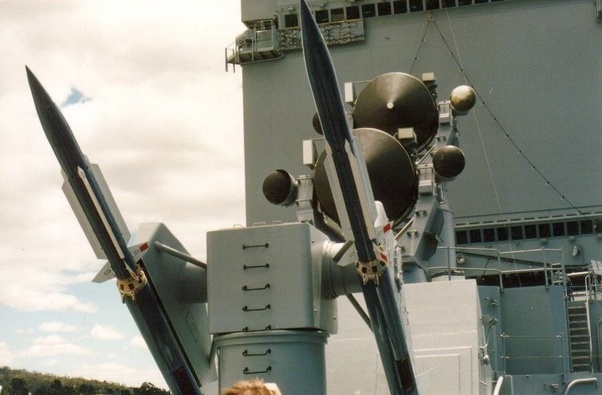
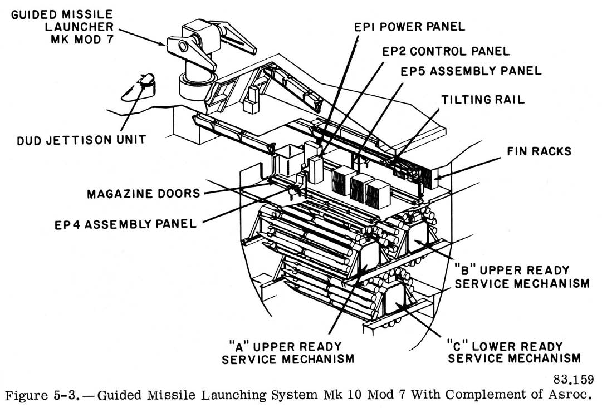
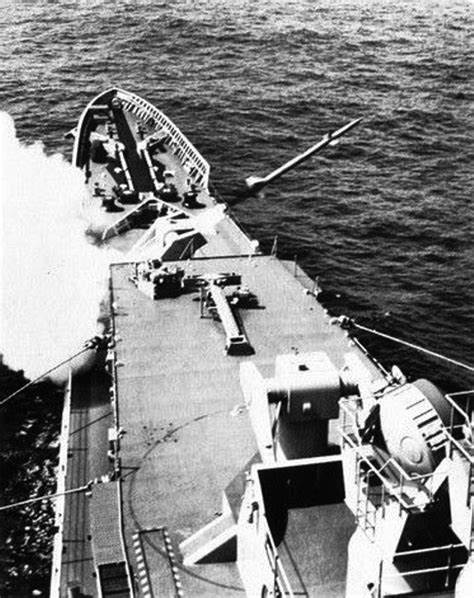
- 1 Twin-Arm Talos missile launcher aft. Talos was a very large, very long ranged SAM, from 50 miles in the initial version out to over 120 miles with the final version. The B and then D versions had a 5 kiloton nuclear warhead, which Long Beach typically had 4 of in her aft magazine along with 48 conventional A, C or E versions. Both Long Beach and Talos are infamous as being the first ship and first ship launched SAM to shoot down an enemy aircraft when in 1968 a North Vietnamese MiG-21 was shot down from 65 miles away. It also almost shot down a sea gull onc
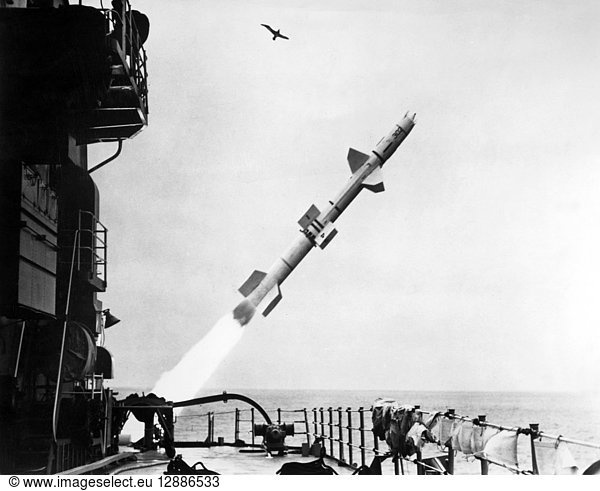
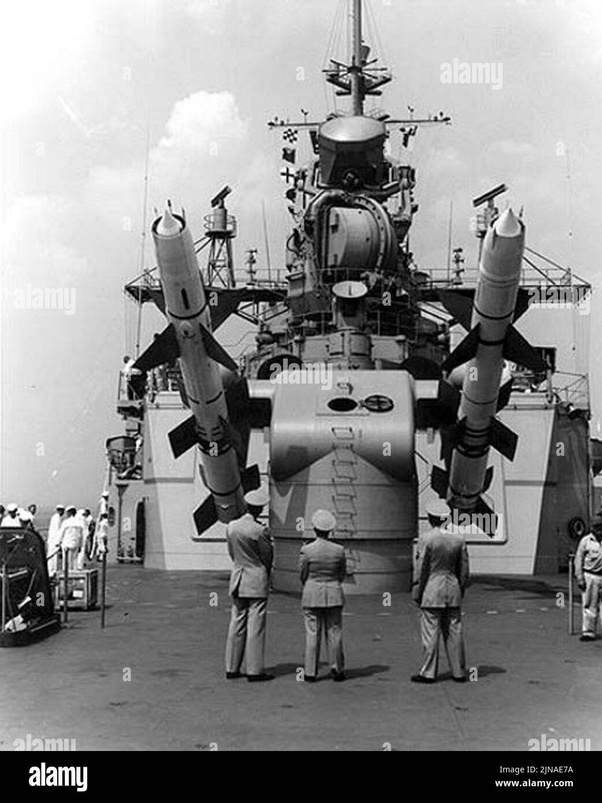
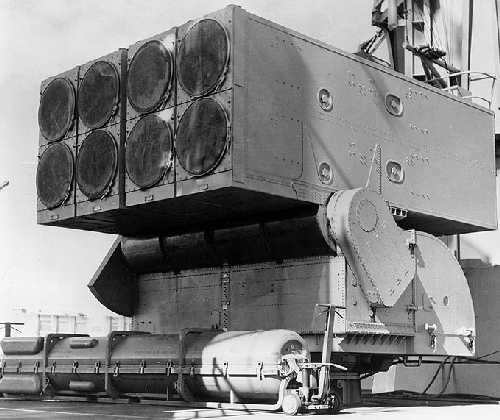
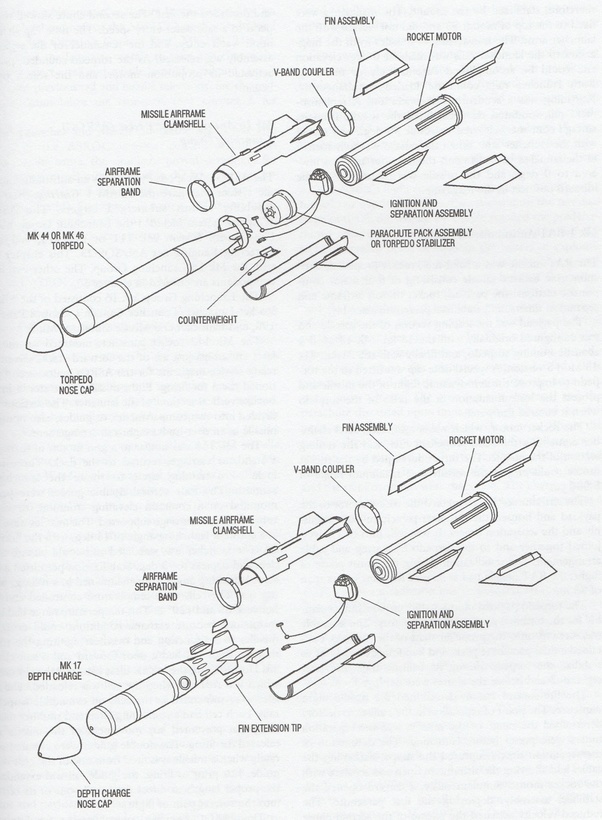
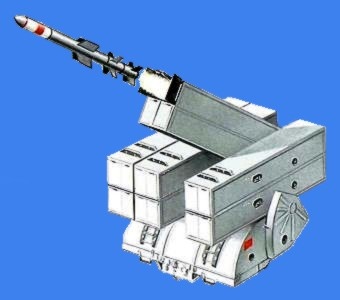
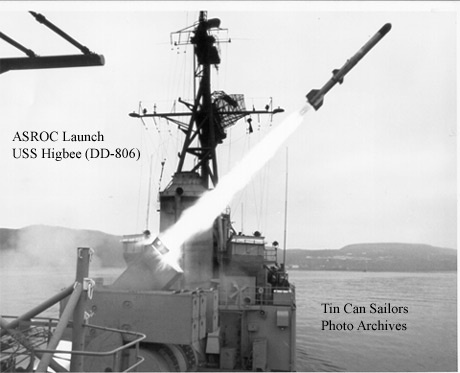
- 1 ASROC (Anti Submarine Rocket) Box-launcher midships aft of the forward/main mast which carried 8 missiles ready along with a magazine for 12 reloads. The ASROC is essentially a torpedo with a parachute and rocket booster. The range is about 10 miles. ASROC was aboard Long Beach in 2 versions, the first being a Mark 46 torpedo with conventional warhead and the second being a W44 nuclear depth bomb with a 10 kiloton warhead.
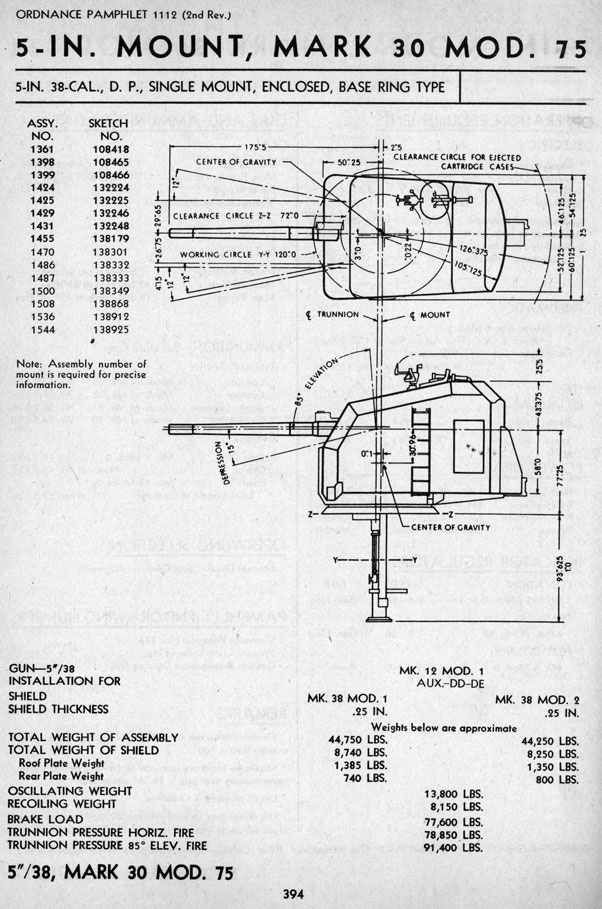
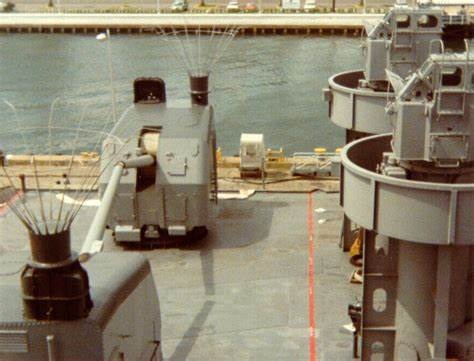
- 2 single Mk 30 5-inch 38 caliber guns.
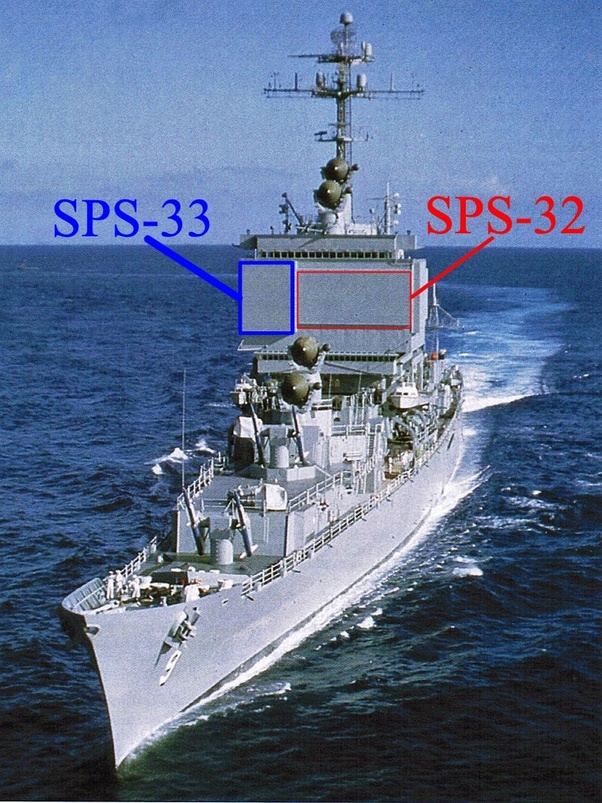
Long Beach started her career as the first warship to utilize a ‘scanned array radar’ system. It was called SCANFAR and it included 2 separate radars, the SPS-32 for Surveillance/Volume Search and SPS-33 for Tracking/Narrow Search.
SCANFAR was the predecessor of the SPY-1 radar however it was so complex it was way ahead of its time. SCANFAR was very heavy, took up alot of space (the primary reason for Long Beach’s big boxy superstructure) it created a helluva a lot of heat meaning it needed increased cooling capacity and the electronics themselves needed lots of power.
By the time the electronics were streamlined and updated with solid state electronics in the 70’s, traditional rotating radar had actually caught with and surpassed SCANFAR’s capabilities so it was replaced.
There was an SPS-32 and SPS-33 flat panel array on each of the 4 sides of the superstructure. The advantages of a phased array arranged like this is that there is a constant return, unlike with a rotating array.
Even though its mounted lower and therefore has a lower radar horizon then something mounted high up on the mast, it doesn’t really affect an air search radar. Its immense power gave it search and track abilities on targets at extreme ranges depending on altitude.
Theoretically SCANFAR’s range was well over 400 miles, that would require a track to be at extremely high altitude or pretty much in space. Realistically SCANFAR could search for and track targets at over 200 miles if they were around 30–50k feet in altitude and very large like say a bomber or airliner.
For fighter sized target its range was over 150 miles. For the engagement with the MiG-21 in 1968, SCANFAR was tracking the aircraft at 165 miles.
The MiG had no idea the ship was out there or that a Talos Missile was homing in on him. They launched the missile when he was 100 miles out not because the missile couldn’t go further but because the fire control radar could only lock the MiG up that far out.
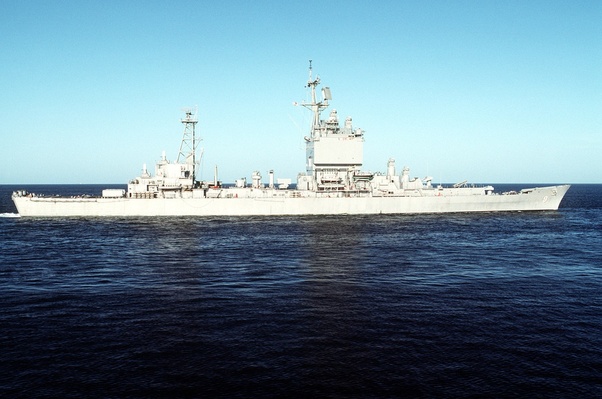
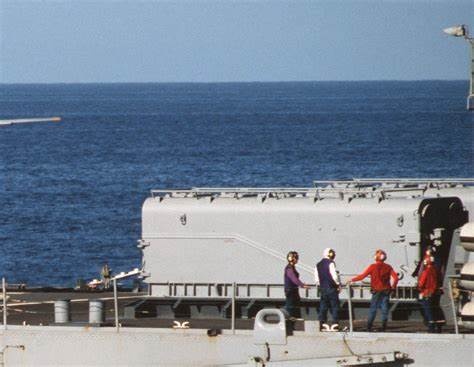
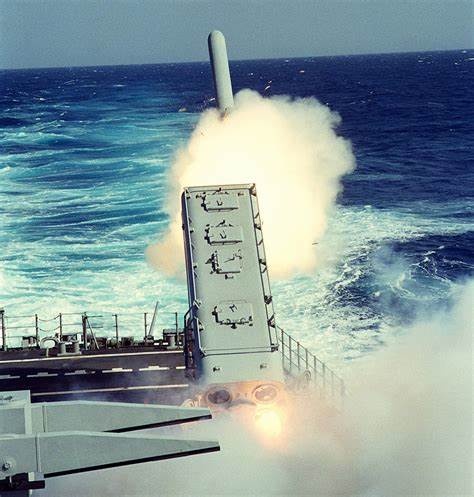
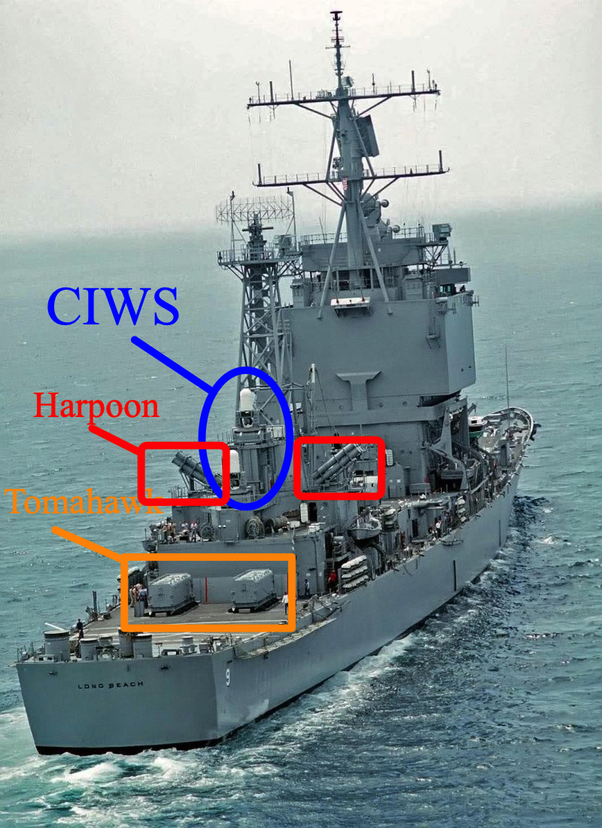
Eventually Long Beach would change quite a bit. The Talos Missile launcher aft was removed, first being replaced by Harpoon Antiship Missiles and then the Harpoons were moved to either side of the aft superstructure being replaced by 2 Armored Box Tomahawk Missiles launchers.
- Harpoon Antiship Missile. She nominally carried 2 4-missile launchers but could be fitted with 4 of the launchers. There were no reloads the missile had a range
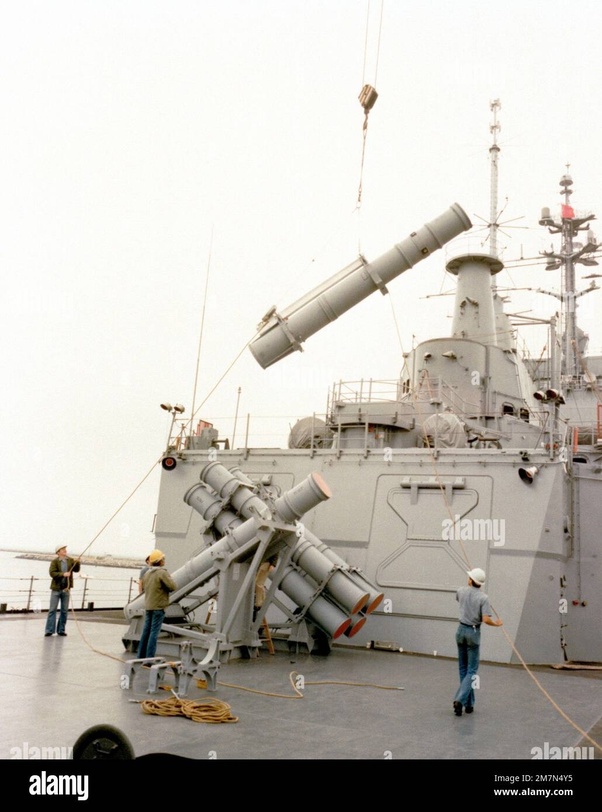
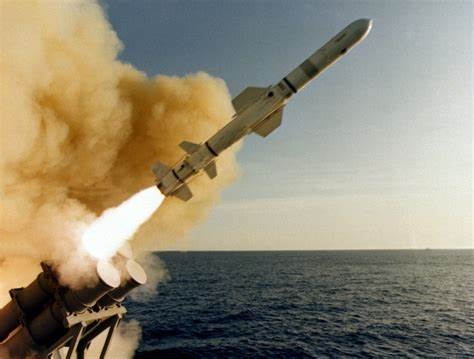
- Tomahawk in 2 4-round Armored Box Launchers (ABL’s). Long Beach typically deployed with 8 TLAM-N’s the nuclear variety of Tomahawk with a 200 kiloton warhead and a range of 800 miles.
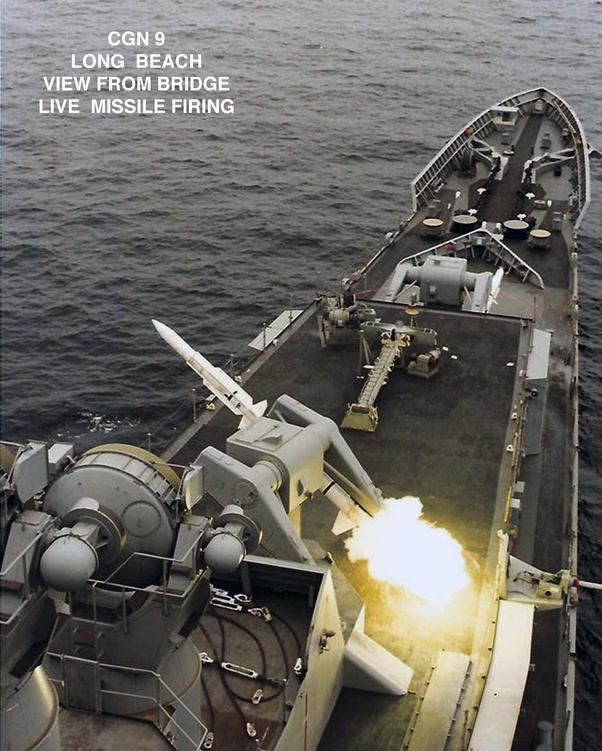
The forward missile launchers were retained but the missiles were replaced with the SM-2 Standard.
- SM-1/2ER “Extended Range”. The RIM-67A/B were physically the body of Terrier missiles with better motors and boosters, along with new guidance electronics. They had a range of 80–100 miles.
- 2 Mk15 Phalanx CIWS 20-mm guns.
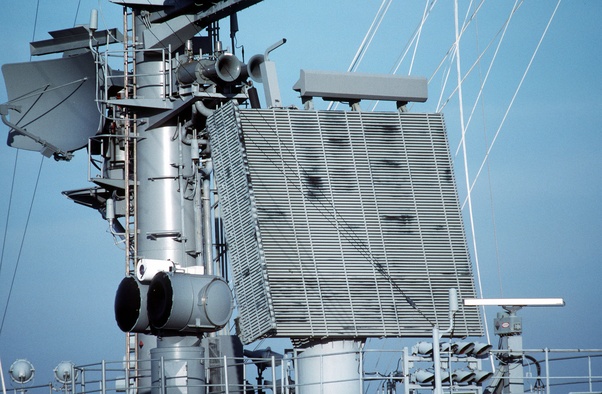
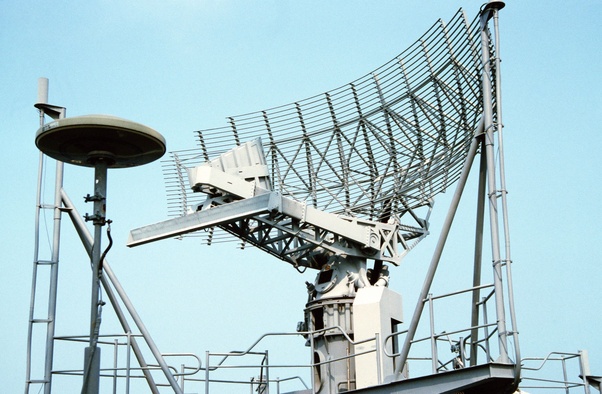
- Long Beach would replace SCANFAR in the 80’s with the SPS-48 3D Air Search and SPS-49 2D Volume Search.
SPS-48
SPS-49
- Long Beach would retain her guns and her ASROC launcher until retirement.
Long Beach was a powerhouse in her era. She was the creme del a creme of the Fleet Air Defense realm.