I recall one winter many years ago, when I was a teenager, living in a small town in Ontario Canada and we spent hours tramping through the countryside on a community search and rescue mission.
We were looking for a local real estate agent, who disappeared on his way home from work. Turns out, since it was winter and snowy, some days he would drive his snowmobile to work and back. That day he never got home. He lived about five miles out of town on the other side of the river. His usual route was to drive along the roadside up the west side of the river, cross the bridge and then to his office.
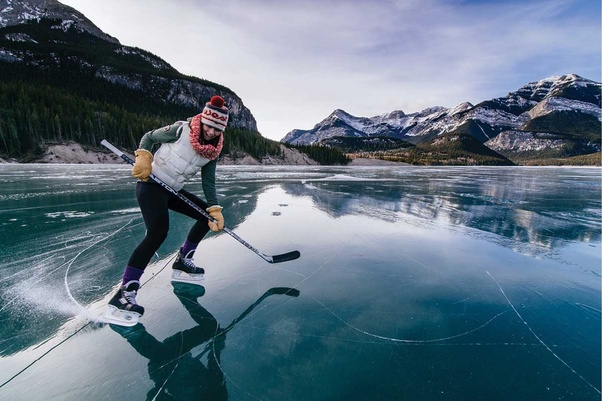
So we spent a day combing the country side for him. We didn’t find him. The police divers did though. It seems that he was in a hurry to get home that day, so he decided to use the frozen river where the kids were playing hockey as a highway. The cops found a hole in the ice and the divers found him and his machine on the riverbed below.
Moving water doesn’t freeze all the way down.
Canada isn’t frozen 6 months of the year with all the rivers frozen. I would suggest you are remarkably ignorant of actual facts.
Even the Yukon River in the far northwest of the nation usually freezes over on the surface but is not ever totally frozen.. The Fraser river rarely even freezes over much less fully freeze to the bed of the river. La Grande River does in many places freeze on the surface but the river continues flowing below the surface as do essentially all the rivers in Canada,
Yup it can get very cold in Canada, especially in the northern parts but even if there is ice on the surface of a river and all rivers do not even freeze over on the surface there is water flowing under the ice.
So they continue making hydro power. I note that the water drawn into turbines is not the top surface water but water closer to the bed of the river where it basically doesnt freeze.