
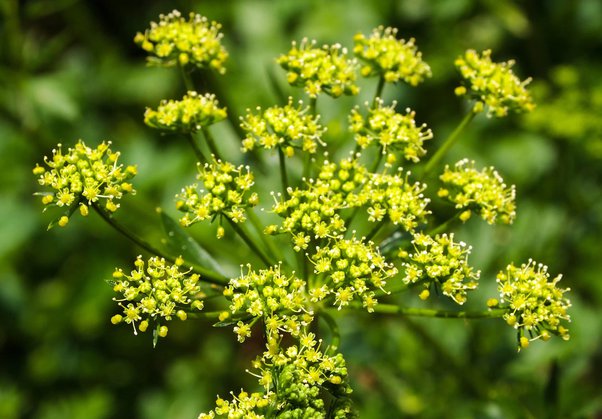
Wild parsnip plant (Pastinaca sativa).
Warning :Graphic images
I didn’t know about this plant or its toxicity until I saw a post by a lady in the USA on facebook.
She had slid into a bush on the roadside, she stood up, brushed herself and went home. Days later she would pay for this with excruciating pain and second degree burns.
Murphy (her name), had stumbled into a wild parsnip plant (Pastinaca sativa). The weed, also known as poison parsnip and hobo parsnip, is a wild version of the root vegetable that resembles a carrot. But while the cream-colored roots are edible, the plant’s sap is treacherous.
Just like hogweed, another similar-looking weed that’s found on the side of the road, wild parsnip sap contains furanocoumarins, which are compounds that cause severe burns.
The sap is toxic and basically strips the body’s ability to control the UV radiations from sunlight. Basically, sunlight activates the compounds in the oil and leads to what is essentially an extreme sunburn, which can worsen with moisture and heat.
She posted these pictures on her page to create awareness of the plant.

Luckily she made full recovery.
While this might not be the most dangerous plant in the wild, I don’t want to imagine what would happen to your skin if it came into contact with 50 to 90% of your body.
The irrefutably most dangerous plant to human beings, going by statistical data, is this one:
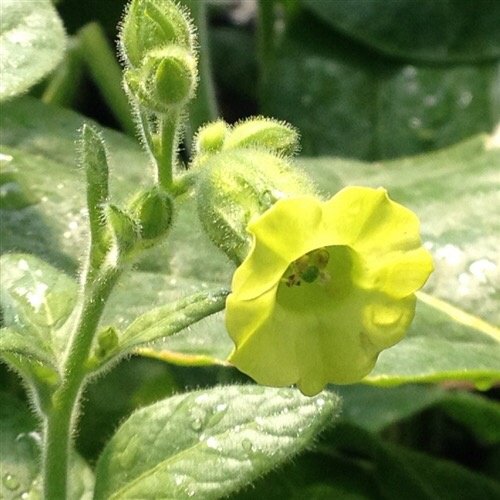
Nicotiana tobacum
It kills 7 million people per year worldwide.
It is poisonous, but not that poisonous. Swallowing the leaves could result in nausea, dizziness, excessive thirst, changes in blood pressure, anxiety, sedation or dysphoria, but people do not swallow it and overdoses are rare. In lower doses, people intentionally ingest it in various ways, and actually enjoy it so much that they can’t quit.
This plant is, if you didn’t already guess, tobacco. More than a billion people in the world smoke it. Because they do, at least a third of them will die prematurely.
But this plant has uses, too. Nicotine is an environmentally-sound, biodegradable insecticide when extracted and sprayed on other crops, it deters herbivores, and even has some medical uses for humans in the appropriate situation. It may have some benefit (pending further research) in treating Parkinson’s, Alzheimer’s, anxiety and depression. Other members of the Nicotiana genus are grown as ornamental plants you can find in public parks, gardens and nurseries, and yes, they contain high levels of nicotine as well.
Here’s another one:
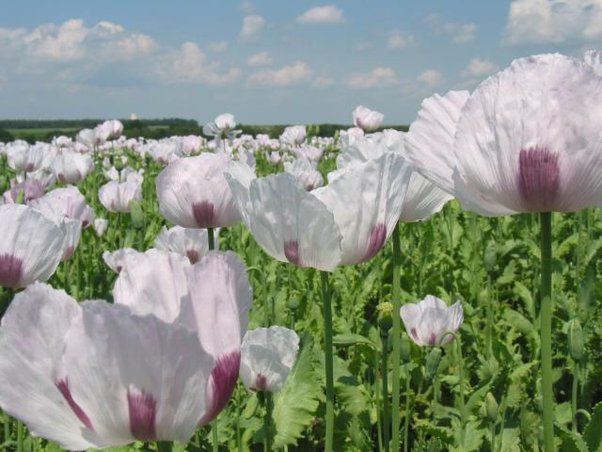
Papaver somniferum
It kills more than 400,000 people per year worldwide.
That number is complicated, because some of those deaths are only indirectly caused by this plant. People who get hooked on the products of Papaver somniferum—morphine, codeine and theobaine (the active ingredients in opium and heroin)—also tend to abuse synthetic versions of the drugs, like oxycodone and fentanyl. But none of that would exist if it weren’t for the opium poppy.
Opiates also happen to save millions of lives per year due to their use as surgical anesthetics and painkillers. Papaver somniferum is also the source of the poppy seeds we use as a spice (yes these come from the same plants, and poppy seeds from your pantry that you plant in the garden will grow into poppies that do produce opium) and is also a popular garden flower.
Now that you see the pattern here, another:
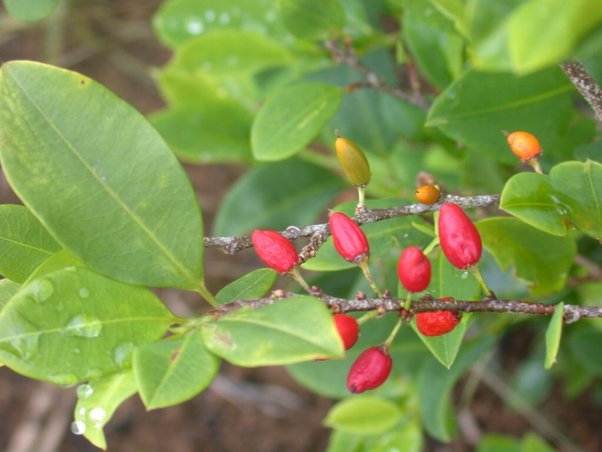
Erythroxylum coca
In addition to killing several thousand people per year due to acute overdoses, this plant seems to find itself at the center of a considerable amount of violence and political turmoil. It is coca, from which we get cocaine.
When left unrefined, the herbal form of this plant (as chewed leaves or tea) is a mild, safe stimulant similar to coffee. Cocaine itself is useful as a topical anasthetic the same way lidocaine and Novocain are used, and as a vasoconstrictor that can prevent or stop bleeding during surgery. Other extracts from the plant are used as food and beverage flavoring.
If you think I’m taking some sort of anti-drug political stance by pointing out these plants, that’s not the case. But the truth is, the most dangerous plants in existence are not the ones with the most acute toxins, but the ones that combine mild toxicity with qualities that people seek out to ingest on purpose. It’s poison that seduces—beautiful and useful and treacherous at the same time. Which brings me to the last deadly plant I’ll add to this list.
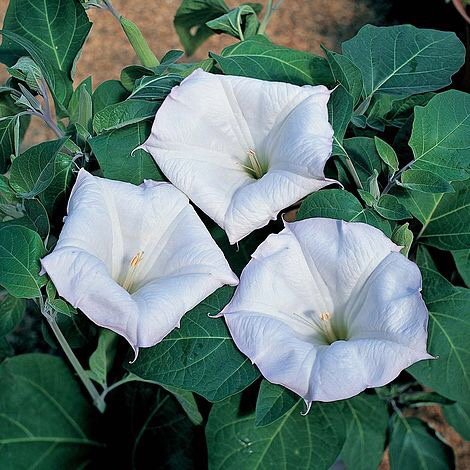
Datura
Datura is a genus of plants native to North and South America that are well-known for being poisonous. Datura contains psychoactive substances and chemicals that are extremely useful medically: scopolamine, atropine and hyoscamine.
Atropine is antidote to the deadly nerve gas sarin, a smooth muscle relaxer, a useful adjunct to opiates that allow them to work in lower doses, and is used in the eye drops an optometrist may use to dilate your pupils to get a good look inside your eye. Scopolamine can also counteract nerve agents and is also used to treat motion sickness. In higher doses these are neurotoxins.
Datura happens to be the number one cause of plant poisonings in the United States. Why? It’s not that Datura is the most toxic plant (oleander, castor beans and many other plants are also toxic in smal amounts) but it’s a plant that, like opium or tobacco, is often consumed on purpose. It’s mostly done by young people hoping for a psychedelic experience, who read somewhere that Datura can provide that.
Unfortunately for would-be recreational users, Datura is a really bad trip: in addition to being, by most accounts, an awful and psychosis-inducing experience, the difference between a minimally-psychoactive dose and a fatal dose is of Datura’s alkaloid toxins is small.
Beyond that it’s impossible to control the dose since the amount of the chemicals varies so much from plant to plant—a pinch of leaves or seeds that have no effect at all when taken from one plant can be deadly when taken from another plant, or even from the same plant at a different time of year.