Welcome to the 50 million AD using time travel technology. The highlights of this trip will be delicious fish fruits, animal-like walking pollen, kangaroos even in Africa, and the first early Bronze Age villages of sapient raccoons.
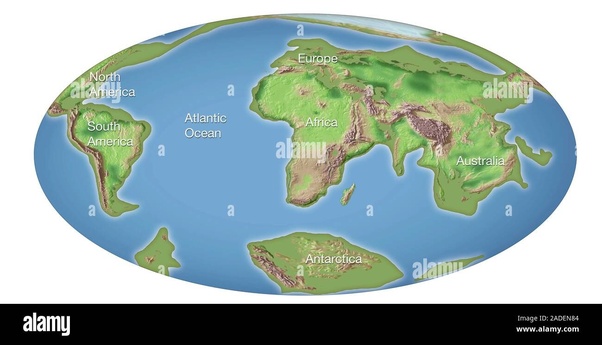
The length of the day is not 24 hours, but 24 hours and 30 minutes. The sky is blue, just as it was 50 million years ago. You land in New Tibet in East Asia, where Australia collided with this continent recently. You see Pteromacropus volans circling above you. It is a flying scavenger that evolved from kangaroos over the last fifty million years. Australia was travelling north all that time, and the first land bridges with Asia appeared about 20 million years into the future.
Many marsupials died out in competition with placentals, but kangaroos and koalas spread all over Asia and even Africa. Koalas are now unrecognizable; they have become cold-blooded and are called now Phascolarctos sedentaria. Their diet of leaves was not very nutritious, and to conserve energy, they evolved through natural selection to become almost plant-like and unappetizing to predators.
Some kangaroos have become apex predators and hypercarnivores. They evolved wing-like structures on their arms for mating display, but during their jumps, they increasingly used them to pounce on their prey. Eventually, they achieved powered flight like birds and bats.
You look at the ground, and there are thousands of spider-like, tiny green animals. Ambulapollen viviflora took their pollination into their own hands and evolved motile, insect-like, voracious pollen that walks around and feeds on vegetation. It is itself a great source of food for contemporary animals. Once it gains enough mass, it finds a stigma within the flower and merges with it. The food it devoured will help produce fruit flesh.
You look into the nearby lake, and there are yummy fruits there. Eggs of Fructichthys dispersus look red from above the water, but the three-dimensional structures in their skin make them transparent if you look at them in the water. They are not to be consumed by aquatic animals but by the ones living on land. They are fish eggs that have evolved to be eaten by terrestrial animals, allowing the egg to pass through their digestive system, come out the other end unharmed, and be transported to new water habitats where fish cannot reach.
Procyon sapiens evolved from raccoons. Over millions of years, they became increasingly dexterous with their hands while washing food, a habit that had already developed fifty million years ago. They have already spread all over the planet from America and are now building their first tiny villages. They are at a technological level comparable to that of the early Bronze Age.
The Earth will be theirs now. Humans are long gone, wiped out by an artificially created virus released by a terrorist organisation in the 22nd century AD. In 50 million years, all that remains of them is a thin layer of their technosphere in paleontological deposits. In some years, when raccoons become more technologically advanced, they may discover diamonds containing human data, such as historical records and knowledge. It will give them a temporary technological boost until they are also wiped out by an engineered virus released by a terrorist organisation of raccoons.
This is the great filter that prevents sentient species from colonizing the galaxy. This is why the cosmos is silent and we cannot find other technological civilizations.