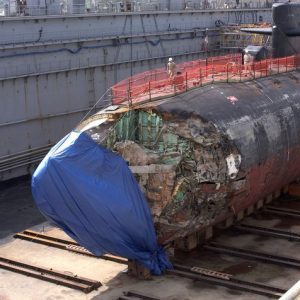
The United States has this thing where we learn from our mistakes. One of those mistakes was spacing twin engines as far apart as we did in the early 1970s. If you guessed I am referencing the F-14, you’re correct. The spacing itself wasnt the issue. It leads to the issue though. There’s a problem when your aircraft relies on it’s “tennis court” to generate 25% of its lift.
That lift is only generated while the aircraft is in forward motion. If even a slightly underskilled pilot attempts risky maneuvers, there’s a very high chance that pilot sends the F-14 into an unrecoverable flat spin.
That’s the mistake the United States learned from. Wings should do the lifting and the frame should do frame things, like keep the vehicle together while it flies. That big gap between the engines causes other significant problems. The Tomcat required that the pilot be 100% engaged with it at all times.
Especially the A and B models. No fly-by-wire. Split throttle sounds cool, but, review 25% lift generated by the body. You’d best know exactly what you’re doing and when you’re doing it if you’re splitting the throttles. What happened in Top Gun Maverick isn’t typically what happens.
Typically, you flat spin after that and become very intimate with the ground. Russia appears to have learned from the MiG-25, but…well, just look at how poorly the Su-57 program did. Quality control wasn’t the big issue with it. Spaced engines, a HUGE tennis court on the back, and engines that weren’t built for it.
That thing had all the problems the F-14 faced when it was in development in 1972. Difference is, the US stuck it out and got an amazing aircraft to finish off the Grummen family of flying cats.
Now, if you have your twin engines right next to each other, most of that flat spin risk is gone. Generally, the aircraft is much smaller. Which makes it more maneuverable. Short of loosing an engine and you not noticing, you’re not going to flat spin.
Simply too much thrust pushing in the same direction. That thrust is also delivered directly behind the pilot instead of spaced out beyond their shoulders behind them. It’s worth mentioning that current engines don’t produce nearly as much thrust as older aircraft engines and this is on purpose.
Eliminating the risk of flat spins is one of those reasons. Pretty hard to control everything going on at 2.5 mach. Maxing out speed a bit below 2.0 mach saves a literal ton of fuel and greatly reduces the risks of some loss of control elements.
Most of which the pilot barely notices because of computers doing most of the work keeping the aircraft flying. If I hit a rough patch of air while flying, the aircraft feels it, everyone on board feels it, but, the computer corrects for unstable air flow and keeps the aircraft in the air.
Doesn’t make the ride any more confortable during the rough air though. Not the point of the system. Keep it in the air is the point and US fighters have those systems installed on them. Lessons learned from the early days of the 4th generation.
When a twin engine fighter’s engines are spread out like is the case with the F-14, Su-57 , Fulcrum and Flanker family of fighters
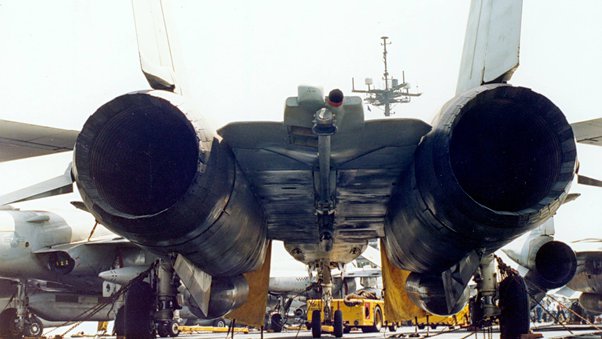
This reduces the chance that both engines will get knocked out if an engine is damaged. However the plane will be less stable due to asymmetrical thrust. On the other hand, when a twin-engine fighter has the engines next to each other like the F-15 does, the odds of both engines being damaged at the same time is increased.
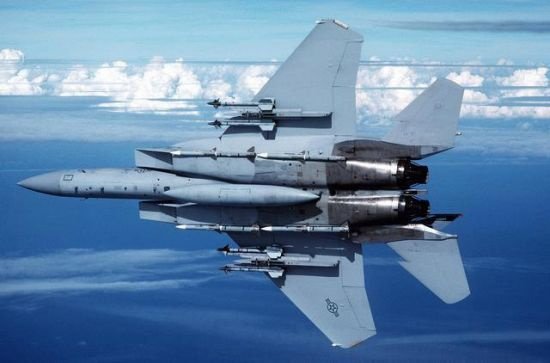
However if only one is damaged, the effects of asymmetrical thrust are greatly reduced.