Well, the prior USB cable types really weren’t adequate.
First, USB-A was just too big. And one end of basically everything required it. That’s not ideal. USB-C allows not only a cord that where which end didn’t matter, but also where orientation doesn’t matter. USB-A (and all prior USB standards) required a specific orientation, which is annoying for regular use.
Second, USB-A was never designed for high numbers of connect-disconnect cycles.
Early USB devices were things like printers, modems, keyboards and mice. They were typically left plugged in all the time. As we got things like smartphones, disconnect cycles went way up, and caused issues with connectors. USB-C is deigned to be connected and disconnected a lot more.
Third, USB-A is also power limited for many applications, and was never designed for the sorts of power needs that a fast recharge on a modern phone requires.
Fourth, it’s really not fast enough. USB is (more or less) limited to 480Mbits/s. That’s well under the speeds of modern networking standards, to say nothing of things like SSD drives or hi-def video needs.
USB had an amazing run as the standard port, replacing all sorts of other ports that were common on PC’s before the mid-1990’s. But it’s time is done, and the replacement of prior standards with USB 3.2 and USB-C is a huge step forward that will make everyone’s lives better.
Actually, I have to admit that USB-C is better in almost every way to older USB standards.
When the EU told Apple they had to have USB-C connections on phones, I was pretty cynical. These types of things never work:
EU formally adopts law requiring Apple to support USB-C chargers | CNN Business
But, I was wrong. Forcing everyone to move to USB-C has been amazingly good for consumers. I am now a USB-C convert and I pretty much won’t buy your product if it doesn’t support USB-C these days.
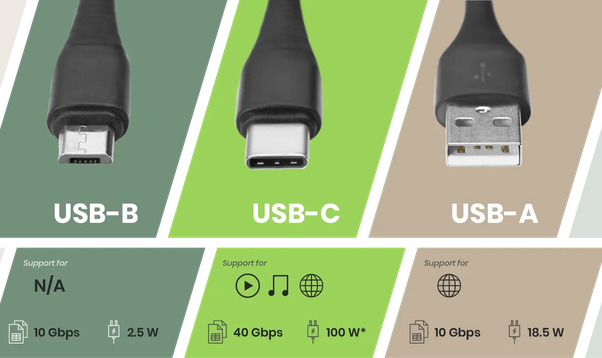
The connector is universal (goes in either way) and supports higher data rates and higher wattage power supply. It’s also acceptably small.
All in all, an amazingly good industry standard.