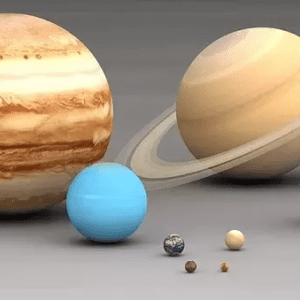
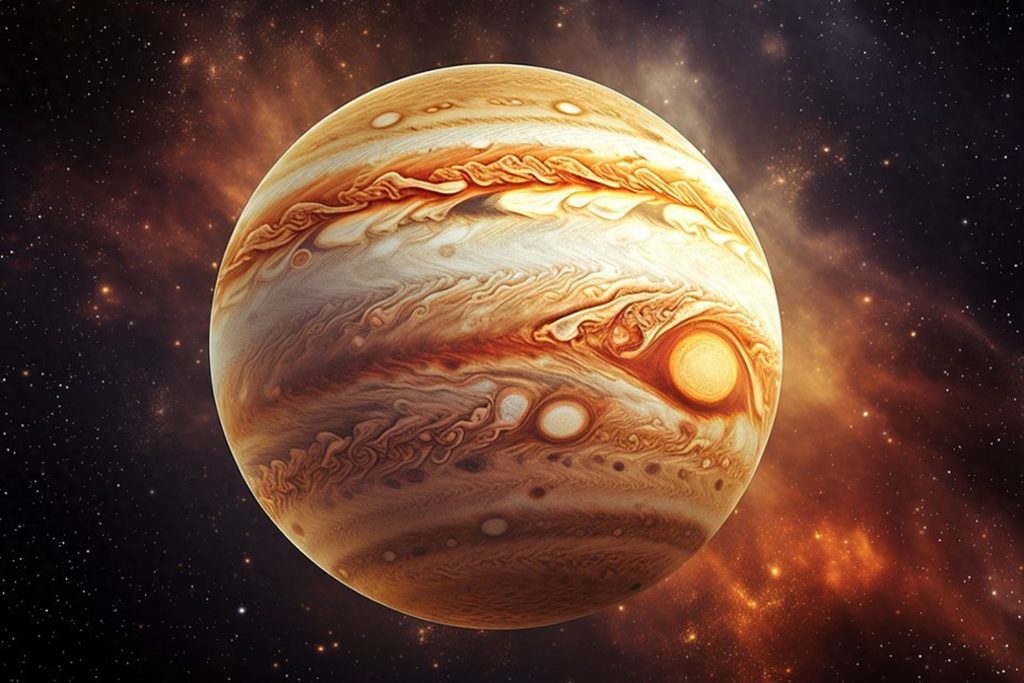
Jupiter is the largest planet in the solar system, with a diameter of approximately 143,000 kilometers and a mass 318 times that of Earth. As a gas giant, it is primarily composed of hydrogen (90%) and helium (10%), with a surface consisting of flowing gas clouds and no solid surface. Therefore, theoretically, an asteroid colliding with Jupiter should simply pass through it.
However, this is not the case.
Although Jupiter is a gas giant, its structure is far from being a thin “cloud layer.” From the outer to the inner layers, Jupiter is divided into several layers. The first layer is the outer atmosphere, which is the cloud-topped surface of Jupiter that we can see. This layer is composed of ammonia, methane, and water vapor, with a temperature of -150°C and a density equivalent to only one ten-thousandth of Earth’s atmosphere.
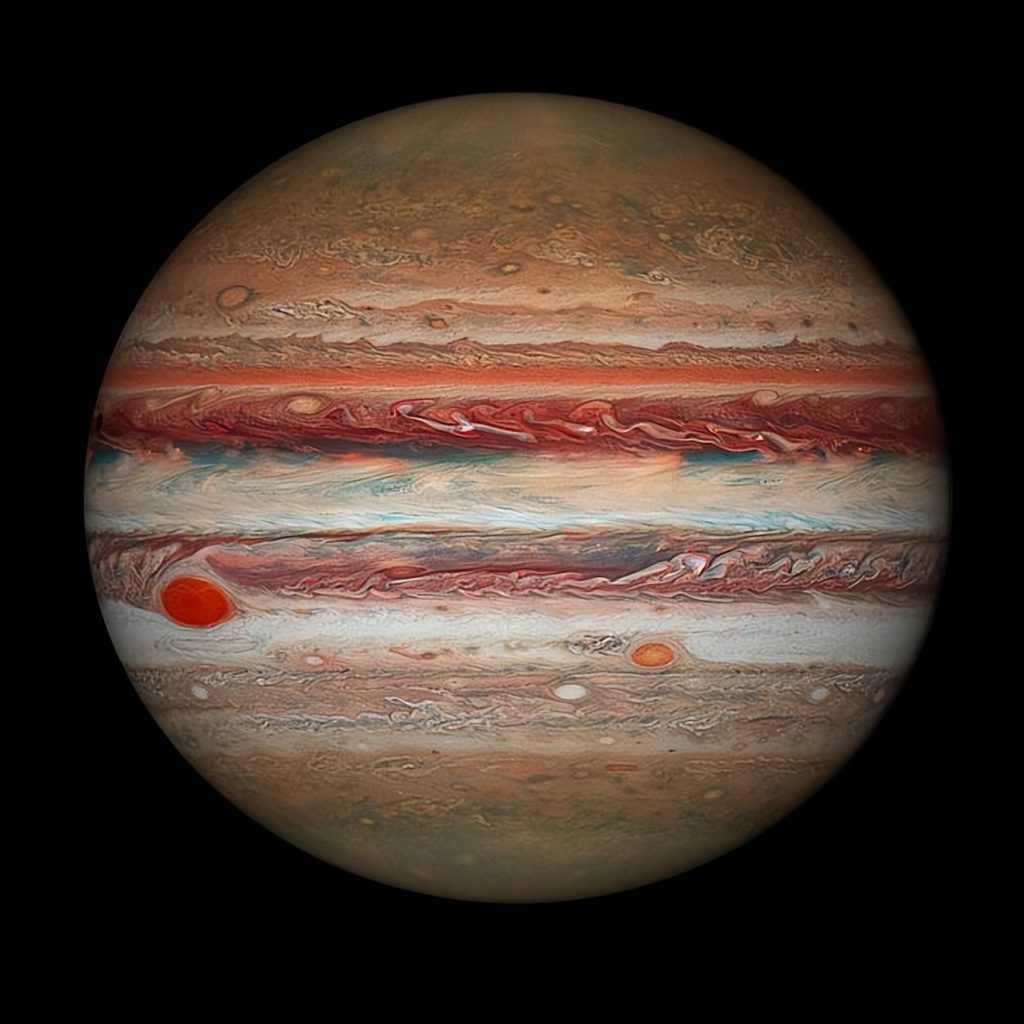
Below that is the middle atmosphere, composed of hydrogen and helium. Both density and temperature increase with depth, reaching thousands of degrees Celsius—a temperature sufficient to destroy asteroids and comets.
Then comes Jupiter’s liquid metallic hydrogen layer, which extends to a depth of 20,000 kilometers. The pressure here exceeds 1 million times Earth’s atmospheric pressure. The hydrogen gas is compressed into conductive liquid metal. The extreme heat and pressure are sufficient to destroy any intruder. What’s more terrifying is that there is no clear boundary between Jupiter’s gaseous and liquid layers; they transition seamlessly into one another.
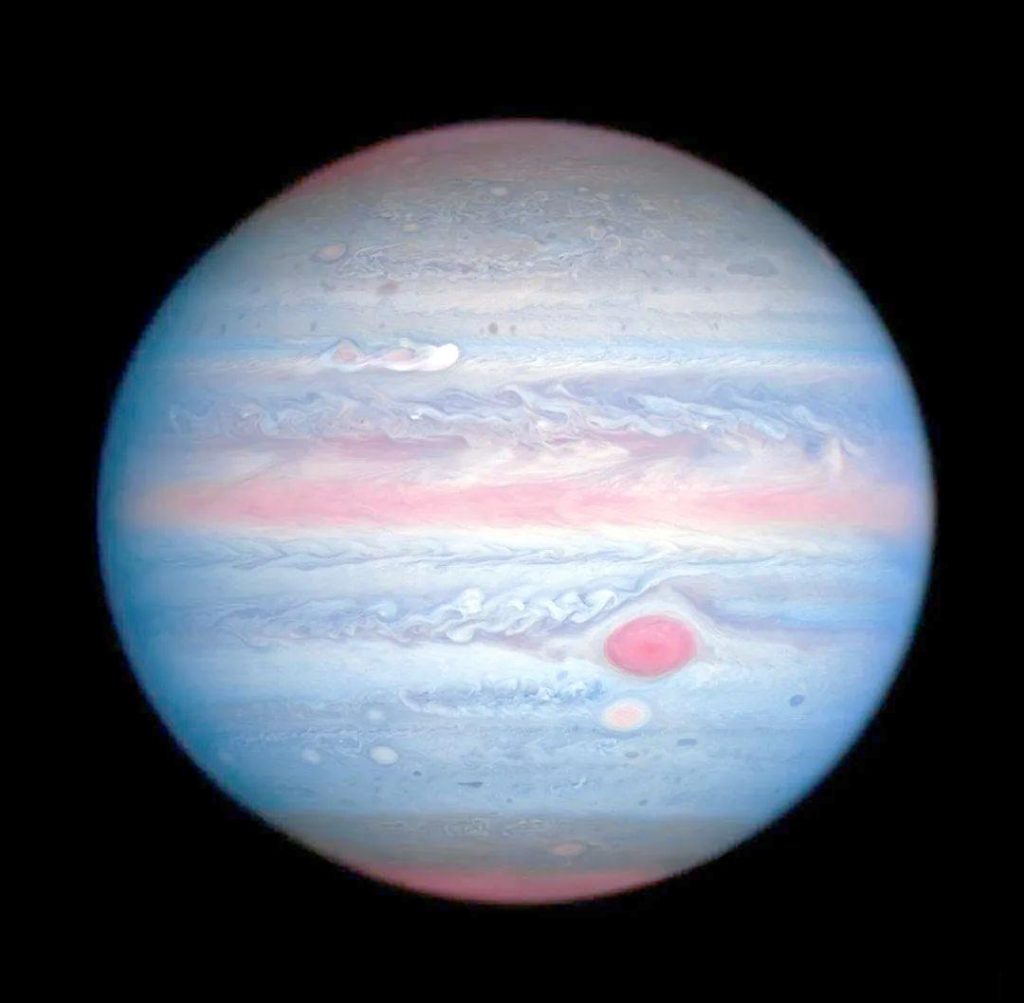
Astronomers speculate that below the liquid metallic hydrogen lies Jupiter’s core, composed of solid metal and rock, with a mass equivalent to 20 Earths, a temperature of 20,000 degrees Celsius, and pressure equivalent to hundreds of millions of Earth atmospheres—essentially comparable to the Sun’s interior. Some even suggest that Jupiter could eventually become a second Sun.
In 1994, the collision of Comet Shoemaker-Levy 9 (SL9) with Jupiter provided humanity with crucial collision data. First, the comet’s nucleus was torn apart by Jupiter’s gravity into over 20 fragments, each with a diameter of 0.5 to 2 kilometers. These fragments struck Jupiter’s southern hemisphere at a speed of 60 kilometers per second, triggering an explosion equivalent to 600 million Hiroshima atomic bombs, leaving a dark spot hundreds of kilometers wide.
This demonstrates that asteroids (or comets) not only fail to pass through Jupiter’s atmosphere but are instead consumed by it, due to the varying levels of atmospheric resistance at different depths.
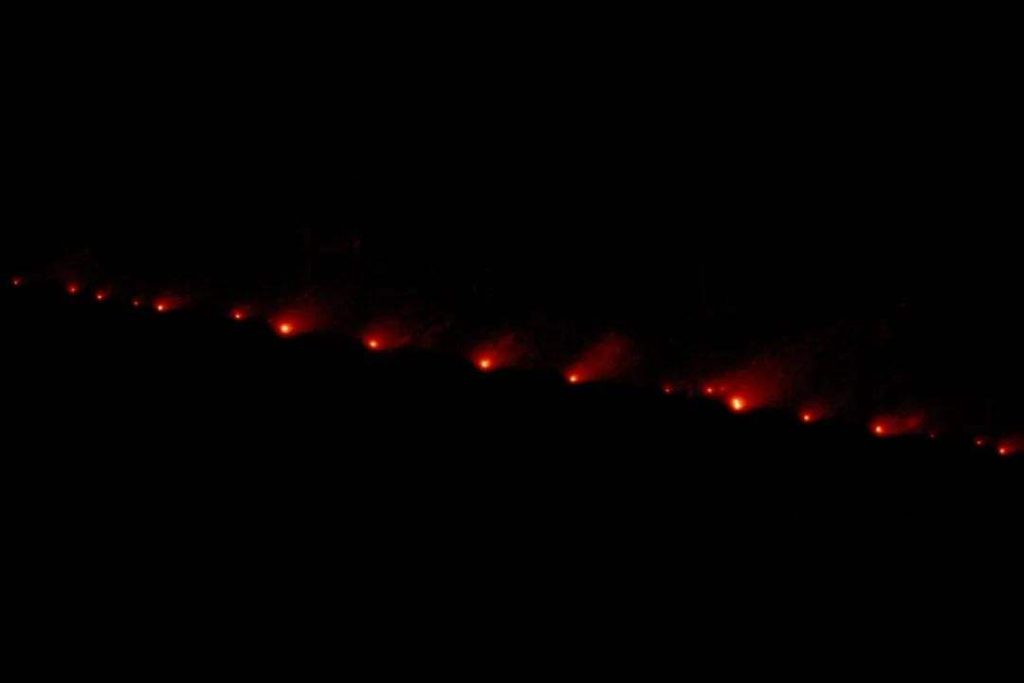
Although Jupiter’s outer atmosphere is thin, the asteroid entered at an extremely high speed, encountering aerodynamic resistance. When the SL9 fragments entered, the resistance was amplified by the square of the speed, sufficient to tear the asteroid apart. An analysis in the 2023 Astrophysical Journal found that the SL9 fragments disintegrated due to excessive resistance when penetrating hundreds of kilometers into the atmosphere, with the fragments further compressed and heated.
The SL9 fragment, with a diameter of 1 kilometer and a density of 2 grams per cubic centimeter, had a mass of approximately 10¹² kilograms, a speed of 60 kilometers per second, and kinetic energy of about 10²¹ joules—equivalent to millions of tons of TNT. Upon entering Jupiter’s atmosphere, the kinetic energy rapidly converted into thermal energy, causing the fragment to vaporize at depths of 100–200 kilometers, triggering a fireball with temperatures reaching tens of thousands of degrees and ejecting gas to form dark spots.
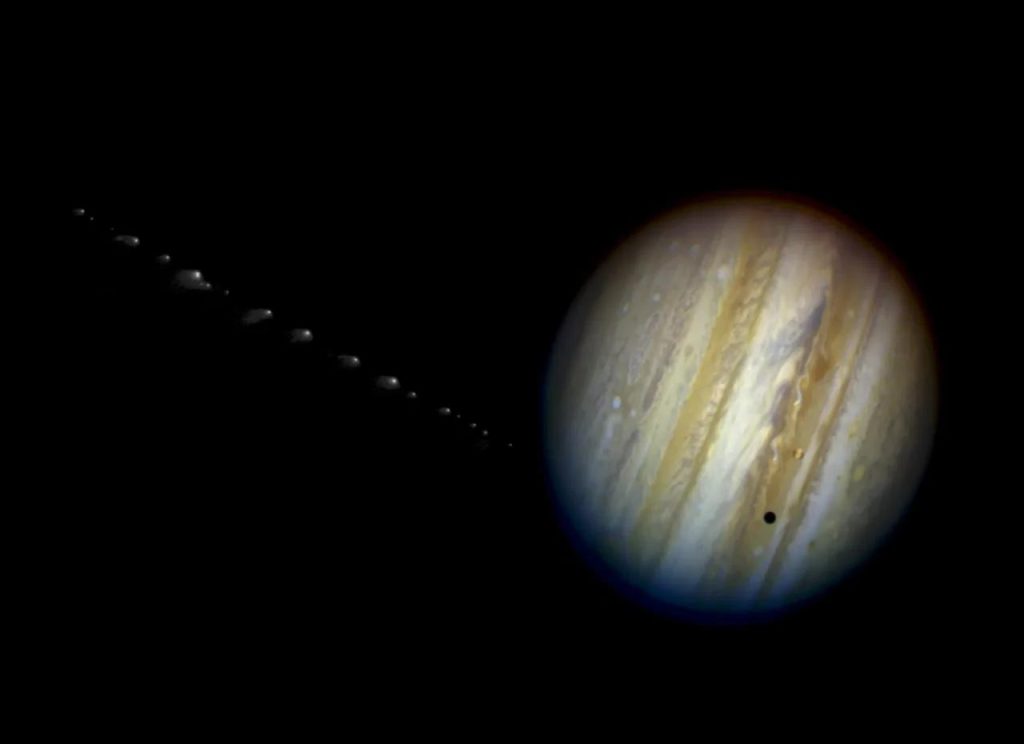
Jupiter’s atmospheric density gradient acts like a “buffer wall,” causing the asteroid to gradually slow down, disintegrate, and explode, unable to penetrate it, ultimately consuming the comet’s core.
Even if a comet or asteroid manages to break through the gaseous layer, it would face the obstruction of a liquid metallic hydrogen layer. Though the density here is comparable to water, the pressure is millions of times greater than Earth’s atmospheric pressure. A 2022 simulation in *Nature Astronomy* showed that liquid hydrogen’s viscosity and density are like “liquid steel,” crushing and dissolving any object.
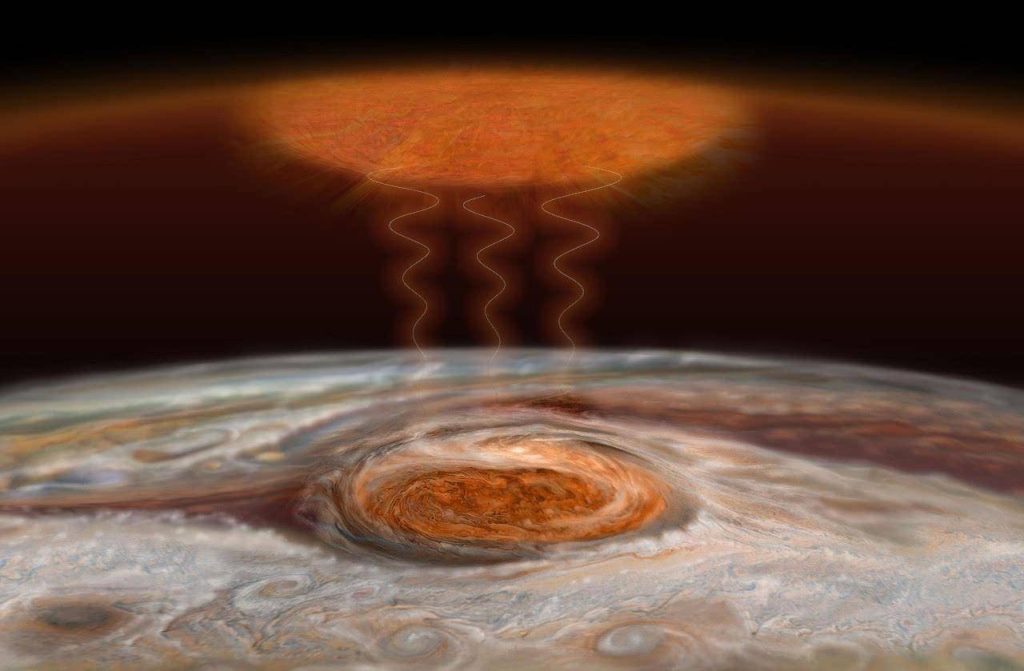
Therefore, in the face of high density and high temperature, no substance can penetrate Jupiter. Theoretically, only neutron star material or the “water droplets” from The Three-Body Problem—these supermaterials—could ignore Jupiter’s obstacles.