To this day, the United States remains the most powerful country in the world.
As the leader of this superpower, every move made by the US president is closely watched by the entire world.
So, how do former US presidents enjoy their retirement after leaving office?
What kind of benefits do retired US presidents receive, and how do they sustain themselves?
The answer may surprise many people—they can earn millions of dollars a month simply by speaking.
Obama in the spotlight, Clinton’s business acumen
As the first African American president in U.S. history, Obama garnered intense global attention upon his election.
Some viewed Obama as a symbol of America’s diversity, while others saw him as a sign of America’s decline.
Regardless, during his eight years in office, the U.S. economy recovered from the crisis.
His talents have also been widely recognized.
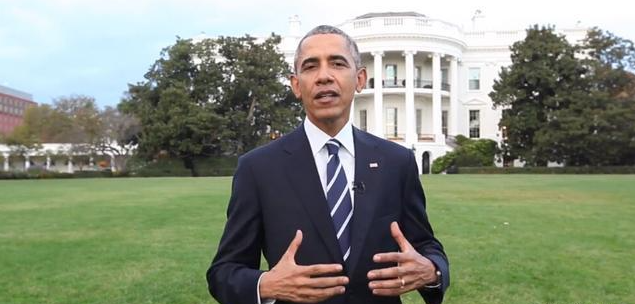
(Obama)
Like many U.S. presidents, Obama began earning money through speeches after leaving office.
In 2017, the year he stepped down, Wall Street giants approached him.
He first accepted an invitation from Northern Trust in New York to deliver a speech on Wall Street.
For a single speech, he received a speaking fee of $400,000.
He then immediately traveled to the Carlyle Group and the renowned investment bank Cantor Fitzgerald for more speeches.
Both speeches carried a speaking fee of $400,000, allowing Obama to earn $1.2 million in less than a month.
In addition to speaking engagements, another common way for former U.S. presidents to earn income is by writing memoirs.
In a sense, every U.S. president is a super star, so their autobiographies often sell exceptionally well.
In the same year of his retirement, Obama and his wife signed a publishing contract worth over $60 million with Penguin Random House.
Besides Obama, another president known for writing books is Bill Clinton.
When mentioning Clinton, people often think of the infamous “Monica Lewinsky scandal.”
This sexual scandal caused Clinton significant trouble during his presidency.
However, after retiring, Clinton recognized the immense commercial value it held.
Therefore, his first autobiography detailed the affair with White House intern Monica Lewinsky.
Moreover, in subsequent books, Clinton also wrote extensively about his romantic exploits during his student days.
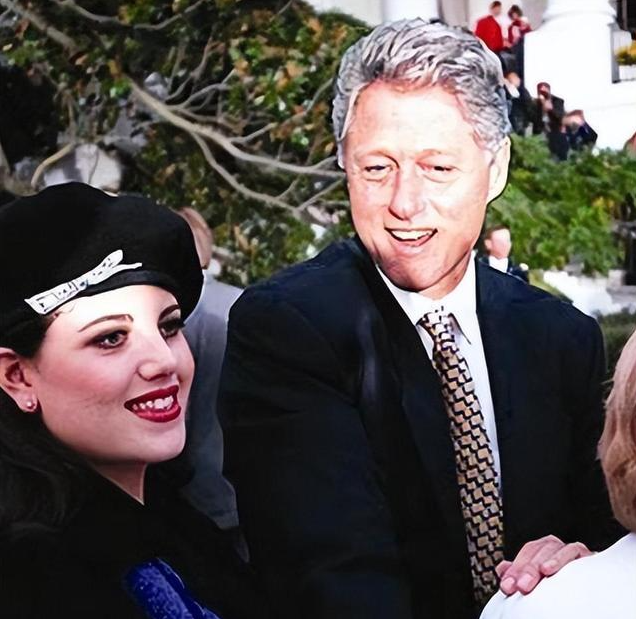
(Monica Lewinsky and Clinton)
Through these books, the public gained insight into Clinton’s lesser-known side, with the image of a womanizing president vividly portrayed on the pages.
When Clinton retired as president, he was still owed millions of dollars in legal fees.
At the time, to mitigate the impact of the “Monica Lewinsky scandal,” the Clintons undoubtedly incurred significant costs.
However, what was unexpected was that simply by writing an autobiography about the “Monica Lewinsky scandal,” Clinton earned tens of millions of dollars.
In addition to writing books, Clinton naturally did not overlook the revenue from speeches.
According to incomplete statistics, since leaving office as US president, Clinton and his wife Hillary have participated in over 700 commercial speeches.
Speaker fees ranged from $200,000 to $500,000, and the Clintons earned over $150 million from speeches alone.
Oil painter George W. Bush and Mr. Carter
While some are eager to make money, others are not as enthusiastic.
As a prominent political family in the United States, the Bush family certainly does not lack funds.
Therefore, compared to Obama and Clinton, George W. Bush has not shown as much interest in making money.
Of course, this does not mean that George W. Bush does not utilize his status to earn money.
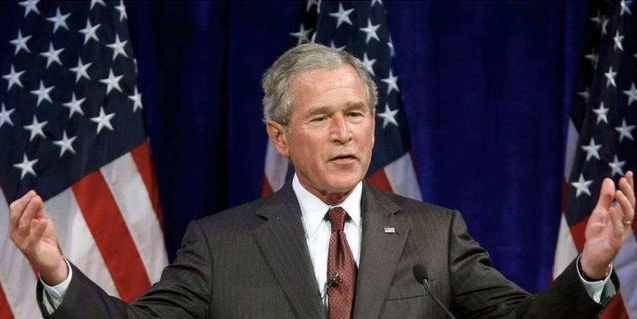
(George W. Bush)
In the two years since leaving the White House, George W. Bush has also participated in various commercial speeches.
His speaking fees range from $100,000 to $175,000.
In total, he has participated in over 140 speeches.
Additionally, his autobiography, “Decision Points,” earned him millions of dollars in royalties.
However, in the years that followed, George W. Bush did not focus on making money.
He lived like an ordinary elderly person, enjoying his retirement.
George W. Bush’s greatest hobby was oil painting, and he devoted a significant amount of time to it.
On one occasion, he even painted portraits of world leaders and held an exhibition of his work.
Besides George W. Bush, another U.S. president who was not particularly interested in making money was Mr. Carter.
Carter did not come from a prominent background, and his lack of interest in making money was entirely due to his personality.
Like many people facing retirement, Carter also went through a period of confusion.
During this time, he didn’t know what to do next.
In the past, he had to devote himself to the national interests of the United States every day, which was busy but also fulfilling.
Suddenly finding himself idle, he felt completely lost.
Fortunately, he quickly adjusted.
Carter returned to his hometown, a small town with only 600 residents.
Before becoming president, Carter was a farmer.
What he hadn’t anticipated was that during his years as president, his family farm had suffered severe losses, accumulating a debt of $1.5 million.
Although he became a “debtor” immediately after retiring, Carter remained optimistic.
For him, as long as he had a place to live and enough to eat, that was enough.
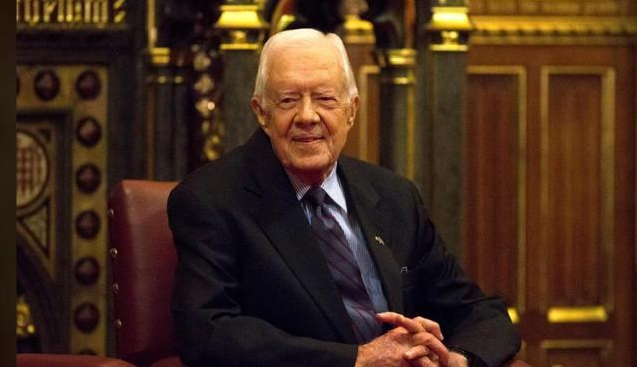
(Carter)
Therefore, he did not follow the example of other U.S. presidents by traveling around giving commercial speeches.
Instead, he returned to his hometown and slowly wrote books to pay off his debts.
He wrote a total of fourteen books in his lifetime, many of which became bestsellers.
After receiving his royalties, he did not splurge but instead invested them in charitable causes.
Carter may not be a president worthy of praise, but his simple lifestyle has earned him widespread acclaim.
In addition to relying on his own efforts to accumulate wealth, the U.S. government also provides comprehensive support to retired presidents.
First, in terms of security, the Secret Service provides lifelong protection for former presidents, their spouses, and their children.
In 1994, to save costs, this system was revised, reducing the protection period to ten years.
However, in 2013, the system was restored to its original terms.
In addition to security, former U.S. presidents receive an annual pension of $200,000.
In the year of their retirement, the U.S. government also provides a substantial sum to settle the salaries of the presidential team and a separate fund to assist the president in smoothly transitioning to civilian life.
Thus, while former U.S. presidents lose their immense power, they can still easily become billionaires by virtue of their status.
Even if they are not particularly interested in accumulating wealth, their retirement lifestyle is more than sufficient to envy others.