
This question took a little thought, but after a couple days of mulling it over, I have to go with my original gut response. Honestly, the scariest thing we might discover on Mars, or any other planet is likely to be ourselves. By that, I mean that these other places are likely to be devoid of life, or at least devoid of mega-fauna, certainly of intelligent life.
That puts humans at the top of the food chain immediately. Any such place is a blank slate and humans can rewrite society, its rules and customs. We are capable of grand, shiny things, but we are also capable of dark evil.
I hope any future government and society established by humans on Mars and other places will be beneficent, but the flip-side of hope is fear. My fear is we will discover our children have built a tyrannical regime where its citizenry, or components of it are oppressed slaves.
Thanks for posting your question on Quora. If you found this response interesting or helpful, please take a moment to up-vote, share with a friend, or follow. You may also enjoy my other responses. Thanks, and Ad Astra!
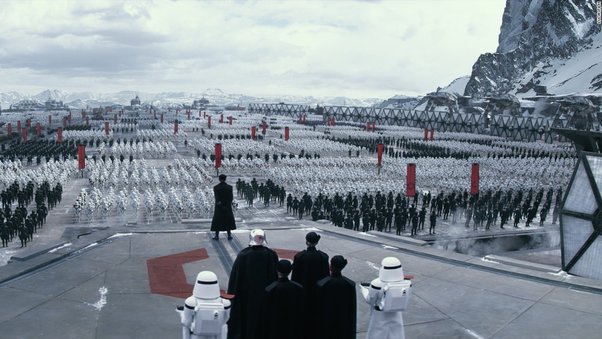
Aliens who do not like us, respect us or see us as anything but walking carbon, with superior technology. A SUPER PREDATOR CIVILIZATION
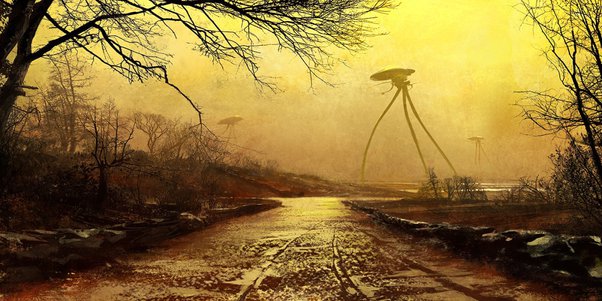
The Milky Way galaxy has 200 billion stars and perhaps 100 billion planets. If even a small fraction of those planets harbored life, and even if only a pathetic scattering of those planets had lifeforms which became intelligent, our galaxy would be teeming with alien civilizations, some of whom would be either looking for us or discoverable for at least a little while.

The number of alien civilizations the galaxy should have can be determined by an equation, the Drake equation, that turns the above factors into variables. When you plug them into the formula, you find that there should be at least 20 civilizations in our cosmic neighborhood.
This makes the fact that we have yet to find any other life in the cosmos almost shocking when you think about it. This seeming discord between how many advanced civilizations ought to be in space and the lack of evidence for any is known as the Fermi paradox. It has lead to dozens of hypotheses and potential solutions over the last few decades.
Many of the solutions aim at one of the variables in the Drake equation and try to make the supposed number of civilizations lower so it is more reasonable for us to not have met anybody yet.
Some propose that life starting at all is rare, others suggest that the development of intelligence is the bottleneck, others still posit that most civilizations would live for a short time before blowing themselves up or, conversely, never even manage to invent the radio.
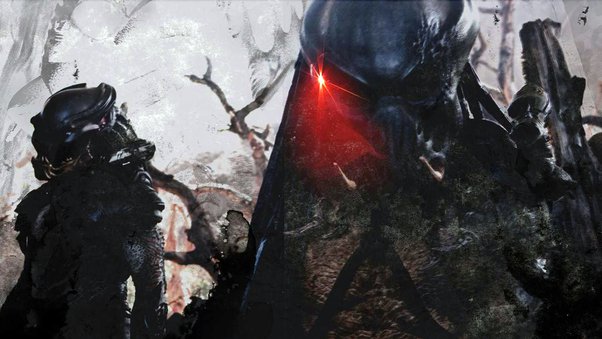
The problem is is we are listening, and we’re not hearing anything.
That brings me to Carl Sagan’s conclusion as to why we should not be broadcasting “hello” messages across the infinite darkness of the universe — -despite the fact that Sagan himself believed most higher civilizations would probably not be hostile towards us.
He believes that, as newcomers to the cosmos, we should remain silent and observe for a long time. Only when we have gathered sufficient notes, Sagan says, should we, “shout to the jungle that we do not understand.”
Such a conclusion brings us to the article’s fourth and fifth solutions to the Paradox, and it is one which I fear we are not taking seriously enough. It is one which Stephen Hawking has compared to Columbus and the Native Americans.
- There are “Super-Predator” Civilizations which roam the dark of the cosmos, going from one planet to the next, one planet to the next, and most higher civilizations know not to broadcast themselves by this very reason. Such is the explanation as to why S.E.T.I. satellites have not received any signals from other intelligences — -they are not broadcasting them.
- There is a single “Hyper-Intelligent” Civilization in the whole of the universe, and like the super-predator civilizations but on a much greater scale, this “Hyper-Predator” eradicates any newer form of intelligent civilization once it reaches a certain point. If this is true, the question of “why” might never be answered.
Although it may sound like something out of Independence Day, it would be ignorant to simply assume that this is not a realistic possibility. Because we have not encountered extraterrestrial life, we have only the nature of humanity to base our assumptions on…and with those assumptions comes very real threat.
In human history, in nearly every instance in which a more-advanced civilization has encountered a lesser one, the result has always been the same: enslavement, or eradication.
Would it therefore be wise to simply assume that extraterrestrial life would not be the same?