In the realm of water landings, Ethiopian Airlines Flight 961 and US Airways Flight 1549 stand as contrasting tales of tragedy and triumph.
On one hand, the ill-fated Ethiopian Airlines flight met its fate on a harrowing journey due to a hijacking attempt, culminating in a catastrophic crash-landing in the vast Indian Ocean.
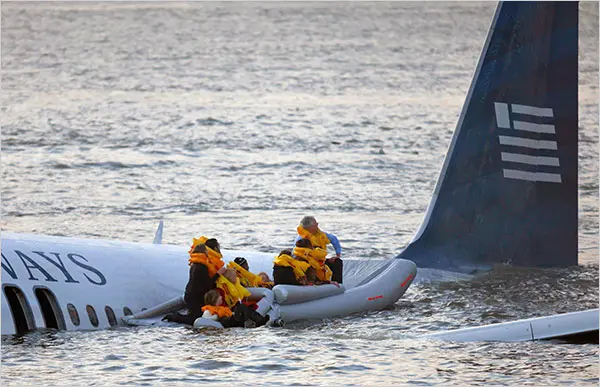
In stark contrast, the remarkable tale of US Airways Flight 1549 saw Captain Chesley “Sully” Sullenberger’s expert piloting and resolute decision-making leading to a successful ditching in the Hudson River, saving all 155 passengers and crew on board.
What sets these two incidents apart, making one a heartrending loss and the other an inspiring survival story, can be attributed to several crucial factors.
The first pivotal factor lies in the condition of the water itself. Clear conditions can provide a pilot with better control and visibility over the aircraft, while glassy water, a state with little to no wind, can present challenges in determining altitude and height above the water surface. Furthermore, rough water can intensify drag, complicating takeoffs and landings.
Another critical determinant is the expertise and technical competence of the pilots. Water landings demand specialized training, as they carry inherent dangers. The odds of survival during an emergency ditching hinge on the proficiency of the flight and cabin crews and the effectiveness of their training.
In the case of US Airways Flight 1549, Captain Sullenberger’s extensive experience and preparedness played a pivotal role in his swift and safe decision-making, ultimately leading to the successful outcome.
To conclude, the fate of water landings hinges on a multitude of factors, ranging from water conditions to the piloting skills and aircraft type.
US Airways Flight 1549’s triumphant outcome can be attributed to favorable conditions, the exceptional capabilities of Captain Sullenberger, and the prompt response from emergency teams. On the other hand, Ethiopian Airlines Flight 961’s tragic fate was compounded by the hijacking incident, fuel exhaustion, and the challenges of landing in the ocean.
These incidents underscore the critical importance of training, experience, and preparedness in ensuring safer outcomes during water landings.
Ethiopian 961 had several factors which contributed to it being torn into pieces. The first was that the landing happened in the ocean vs a relatively calm river. While Sully’s landing can be appropriately described as a miracle, the Ethiopian crew had a far more difficult task. In the ocean, waves can be quite high, causing the water surface to be choppy.
If we are thinking of the water surface as the “runway,” while the US Airways crew had the benefit of a glassy smooth water surface, the Ethiopian crew’s “runway” was one that had 15 foot high hills. You’d be hard-pressed to land the airplane in one piece.
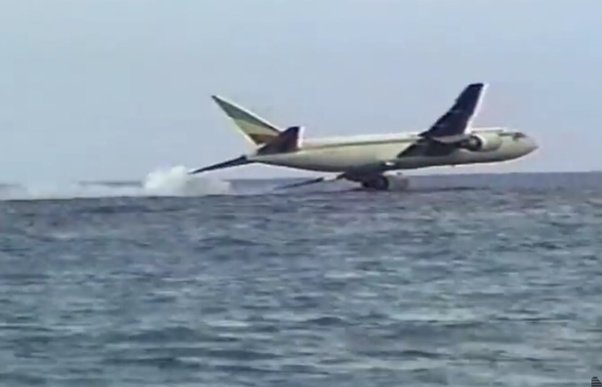
The second was that the captain was actively fighting hijackers in the cockpit. I read a report that the left bank at which Ethiopian entered the water was caused by one of the hijackers panicking and turning the control column hard to the left seconds before impact.
Not only is landing an aircraft on the ocean hard enough in itself, but doing it while you’re fighting three guys who clearly want you dead? Count me out of that one.
Ethiopian also had the disadvantage of not being able to lower their flaps, resulting in a much higher landing speed. While manageable on normal approaches, remember that Ethiopian was essentially trying to make a belly landing on a runway that had 15 foot high hills all the way down.
Again, not ideal. Finally, Ethiopian hit a coral reef after landing in the water. While unlucky, that’s the risk you run when making a forced landing in the ocean, or as a matter of fact, any uncontrolled surface. All things considered, the Ethiopian crew did a fantastic job.
While many people died as a result of the crash, you’d be hard-pressed to find any one who had fault with what the crew did in a pretty hopeless situation.