Imperial Japan was already embroiled in nearly a decade of conflict before World War 2 broke out. During that time, the Japanese military gained valuable knowledge when it came to feeding their soldiers and they made sizable efforts to improve their rations.
First & foremost however; there was no “one size fits all” field ration. Varying wartime conditions and environments meant that meals weren’t always standardized and soldiers ate what they could buy, take, steal, or catch.
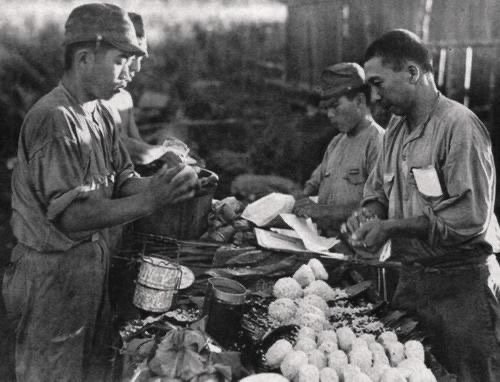
Moving forward, Japanese field rations were usually prescribed in two categories: the “normal” ration and the “special” ration.
The normal ration was prepared during mealtimes by the field kitchen and typically served in tin boxes. It usually consisted of the following:
660 g (23.28 oz) of rice
209 g (7.37 oz) of barley
209 g (7.37 oz) of raw meat
600 g (21.16 oz) of fresh vegetables
60 g (2.11 oz) of pickled vegetables or preserve
Rice was (& still is) a staple of Japanese/Asian cuisine, thus it served as the mainstay of Imperial Japanese field rations. Barley was mixed with the rice to provide additional nutritional elements because rice (while rich in carbs) doesn’t really provide much of anything else nutritionally.
The raw meat usually consisted of anything that could be foraged because fresh meat shipments from Japan were sparse; seafood was naturally a popular option due to the island/coastal environments where the Imperial military operated. Wild game such as boar and even monkeys were also all on the menu if they could be caught.
Fresh vegetables were again a rare luxury from Japan, and if soldiers/sailors wanted any they mostly had to be foraged for.
Essentially, the only food stuffs that the military received regularly from the Home Islands were rice and preserved/pickled items because they had long shelf life’s. Transporting fresh items such as fruit, vegetables, meat, etc was costly and difficult due to how quickly they spoiled. Instead, units were encouraged to live off the land, thus freeing up logistics to transport other items such as ammunition & equipment.
The second type of ration is the Special Ration which was to be carried with soldiers and eaten if they couldn’t receive their normal rations, consisted of the following:
580 g (20.46 oz) of rice;
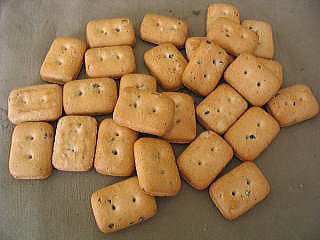
230 g (8.113 oz) of biscuit;
150 g (5.3 oz) of canned meat (or 60 g (2.1 oz) of dried meat);
120 g (4.23 oz) of dried vegetables;
The Imperial Japanese military also issued out small quantities of beer/sake when available to improve morale.
Overall, the diet of a Japanese soldier revolved around 3 things: rice, protein, & vegetables (usually pickled or dried); this meal was cheap, filling, & nutritious. The big kicker however was that this meal plan would completely collapse under full continuous combat operations. Many Japanese soldiers found themselves on the brink of starvation because their provisions simply weren’t enough to last them against the well supplied Americans.