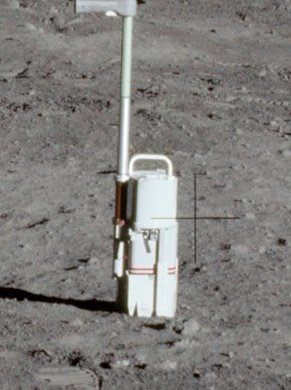
The crosshair was etched into a glass plate called a Reseau plate in front of the photographic film. It allows examiners to see whether the film is warped, determine sizes from angular resolutions etc.
These lines are pretty thin. That means that they can disappear if you make a bad or lo-res scan, or if the light into the camera is bright.
On this image, the crosshair and the red stripes disappeared in the scan, so that it appears that the crosshair is behind the stereo camera.

This is a better scan of the same negative. The crosshair is in front.
On this image, from Apollo 15, you can barely see the crosshair on the flag. On the white parts, the black lines almost disappear.
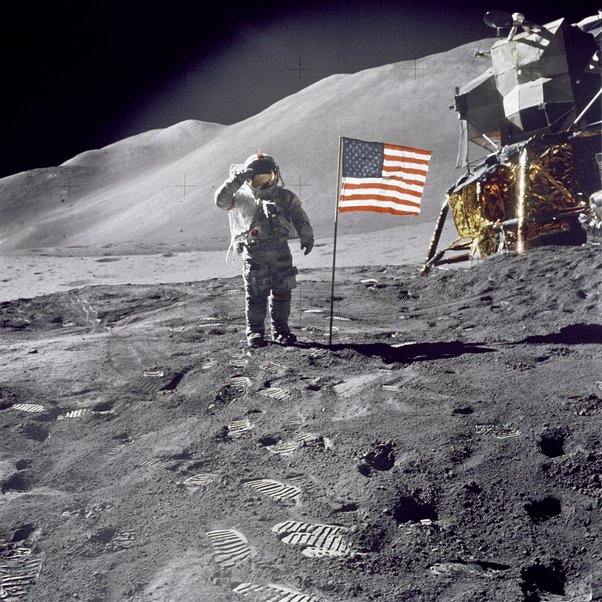
And that’s because the white is so bright that it simply washed out the crosshair on the film.
It’s both easier than you might think and harder.
First of all, how do you show a crosshair BEHIND an object. I mean that’s sort of obvious. So actually their argument sort of fails there.
Really what they’re trying to claim is that the object prevents the entire crosshair from being seen.
So let’s discuss this a minute: why would there be crosshairs? And even then, why would it presumably be BEHIND an object? Their arguments here don’t make sense.
But, here’s the thing. They’re sort of right. In some of the photographs they present (and many that are commonly available) you see only part of a crosshair. What’s up with that?
Well, first of all, what’s up with the crosshair? It’s actually thin lines etched into a glass plate called a reseau plate. Typically called reticles (though I see some places call them fiducials). The reason they’re there is so that afterwards experts can align things up, figure out measurements and other factors. Basically they provide a known reference point. So for example, one way they can be used is take a photograph of some rocks, take a step to the right, take another picture. Now, using the reticles you can line everything up and create a 3-D photo of the scene. This helps you determine distances and how things are arranged.
So, crosshairs exist on all the photos (I believe, I don’t think the reseau plate was ever removed).
So what happens in some photos?
Ever take a picture of something dark in front of a bright background and not be able to see it? It’s washed out.
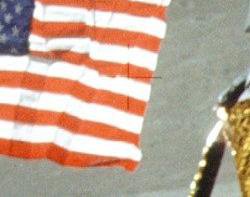
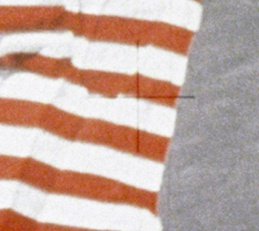
Here’s a photo (NASA, detail of AS15-88-11863) taken from Photography – crosshairs
Notice how in the white area you can’t see the reticle? It’s there, but it’s washed out.
Now here’s a screen grab from a high-res version of the same photo directly from NASA’s site: Photo-as15-88-11863
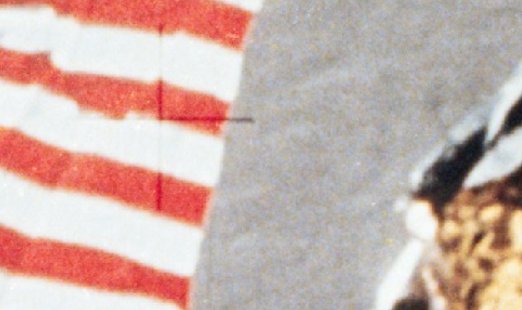
Notice now you can actually faintly see it. It’s still washed out, but the compression in the copy above hasn’t completely removed it.
So really in most cases, there’s two factors going on:
In the original it’s sometimes washed out, especially if it’s against a very bright background (like the white stripe on the flag) and then often deniers are looking at copies of originals that often have been compressed and have compression artifacts that remove detail.
So, the crosshairs exist, but sometimes can’t be seen for very simple reasons.