
Science

How does a human body decompose in space?

Unlike decomposition on Earth, governed by bacteria, insects, and a host of environmental factors, the process out there unfolds in an entirely alien way.

Forget about putrefaction as we know it. Space is a near-perfect vacuum.

Without oxygen, the legions of aerobic bacteria that feast on our tissues after death can’t operate.

Depending on where you expire in space, your first fate would likely be either mummification or flash-freezing – not exactly what we picture with decomposition.

A body exposed to the naked vacuum, say, ejected from an airlock, would rapidly lose fluids as the lack of pressure forces gasses and moisture to boil away.

If within range of a star, you’d become a desiccated husk, skin leathery and dark from relentless radiation damage.

If far from any heat source, you’d freeze into a macabre popsicle.

Some decomposition might still occur, just far slower.

Your gut bacteria are anaerobic – they don’t need oxygen. For a time, those microbes would keep digesting what was left in your digestive system.

Eventually, the relentless radiation of space breaks down complex molecules.

Over a vast stretch of time (we’re talking centuries or millennia) what’s left would likely degrade further, a slow disintegration driven by cosmic rays rather than hungry critters.
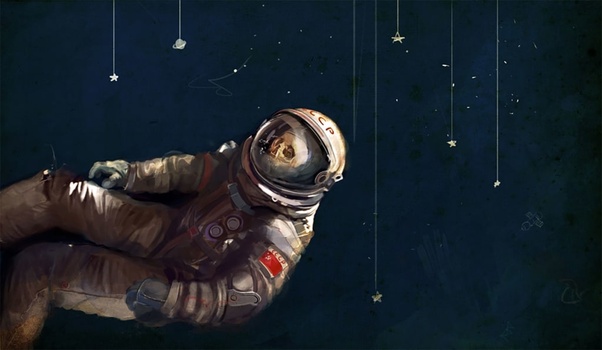
Whether you’d be reduced to scattered atoms or some kind of bizarre space-mummy depends on your trajectory and a staggering amount of luck.

Related Posts

Why is the speed of light so slow?

I have never figured this out either and the first time I worked out how slow light actually travels was kind of an epiphany. It’s not that it’s…

According to Richard Feynman, gravity travels faster than light. If it did not, the torque would cause the planets to spiral out of the solar system. Is this correct?

If gravity takes time to reach Earth, we should be pulled toward where the Sun was 8 minutes ago. This delayed pull should fling us out of the solar system….

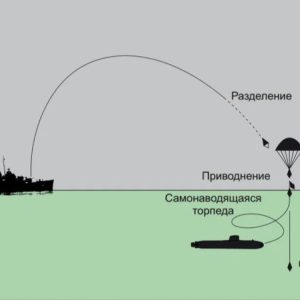
How does a missile find a submarine?

The anti-submarine missiles currently in service are best described as rocket propelled torpedoes. They are fired into the area where the submarine is, the torpedo detaches from the…

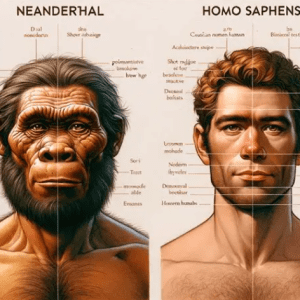
If you brought a Neanderthal baby to present-day and raised them normally, would they be any different? Could they learn as well or has the brain changed a lot?

While Neanderthals were genetically almost identical to us, as fellow erectus lineage cousins, the baby could probably be raised the same way. The problems would come during socialization….

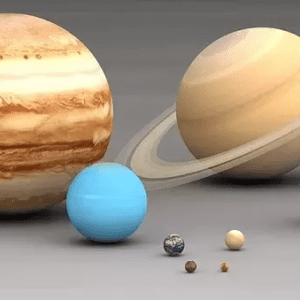
Can we nuke gas giant planets and wipe them out of solar system?

In 1992 a large comet was discovered that had recently been captured by Jupiter’s gravity. Jovian tidal forces had broken it into several pieces It finally crashed into…

If the Earth was to stop spinning for a full 3 seconds and then resume spinning, what would happen to everything on Earth and how would it be affected?

The world basically starts over. Plenty of life would remain but probably not many humans. Devastation is worse at the equator but pretty bad everywhere. Let’s break it…