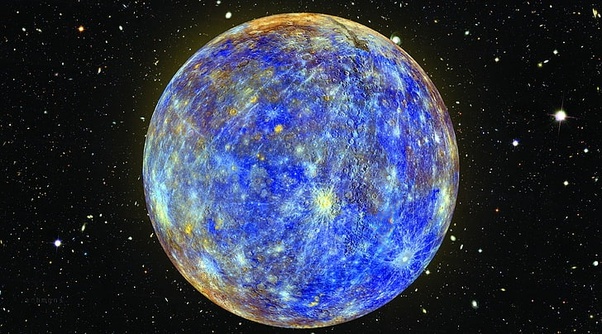
Because, Mercury is a near-vacuum, a desolate wasteland with a ghost atmosphere.
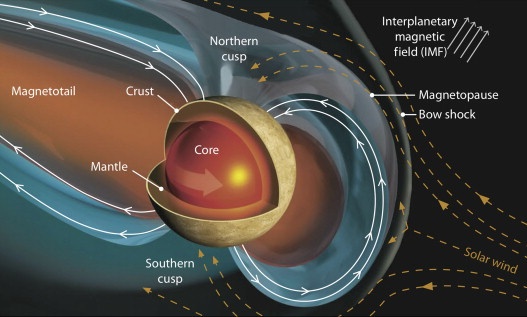
This is due to a combination of factors: Mercury’s feeble gravitational pull, akin to a dying star’s last gasp, can’t hold onto much gas, and the solar wind – a relentless torrent of charged particles from the sun – continuously blasts away any wispy remnants of atmosphere that might try to cling to the planet’s scorched surface.
This near-vacuum means Mercury lacks the crucial ingredient for retaining heat: a thermal blanket.
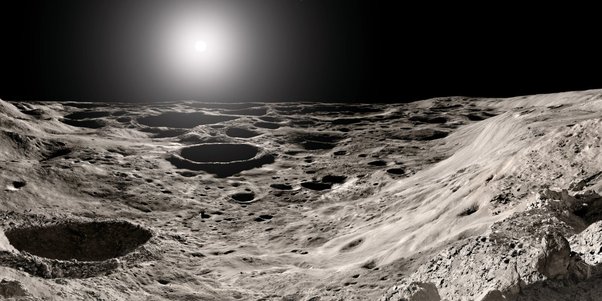
Unlike Venus, our solar system’s veritable inferno, which boasts a dense mantle of carbon dioxide acting as a heat trap, Mercury’s barren surface is exposed to the full wrath of solar radiation.
It’s like comparing a flimsy windbreaker to a goddamn parka in a blizzard, a futile attempt to shield oneself from the unforgiving elements.
Thus, while Mercury does get bombarded by solar radiation, the warmth has no locale to linger.
It’s a relentless cycle of scorching days and frigid nights, a planet ensnared in an eternal existential predicament.
The sun-facing side bakes at temperatures reaching a hellish 800 degrees Fahrenheit (430 degrees Celsius), hot enough to melt lead and drive a man to madness.
Meanwhile, the night side plunges to a bone-chilling -290 degrees Fahrenheit (-180 degrees Celsius).
The temperature of any object is determined by the balance of heat energy coming in and the heat energy coming out.
Mercury receives the most energy of all the planets in the Solar System, due to being the closest to the sun.
But it loses energy by radiating it away back into space.
And it has almost no atmosphere to slow down that rate of heat escape via a greenhouse effect.
Venus, however, has a very thick atmosphere that produces an extreme greenhouse effect. As a result, Venus loses heat to space much more slowly than Mercury does, which more than offsets the fact that it gets less energy from the sun due to being further away.
Which is why Venus is hotter than Mercury.