We were building a nuclear power station. One part of a nuclear plant is the reactor building (sometimes called “the containment”). In many “western” sites, the containment structure is that big round building (we used to call it the “BRT”. Big Round Thing). Here’s a photo:
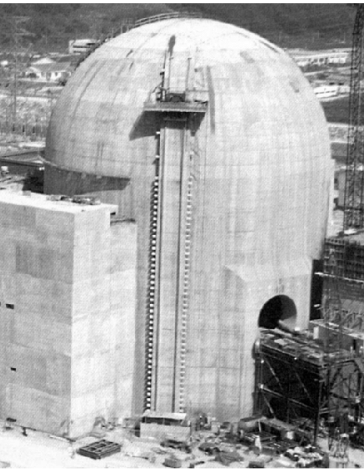
Anyway, the containment building is made of reinforced concrete and had to be poured in a “continuous pour”. The site actually built a concrete plant to supply the concrete. When the time came to start the pour, no one knew how much concrete it would actually take. The concrete engineer thought it would take some number of concrete trucks (I want to remember it was 5000 to 5500), however this was more than 4 decades ago.
The engineer was, however, smart enough to ask a person on his crew about this. Gary happened to have a master’s in math. Gary looked at the prints and came up with a shape profile of the containment wall. There is a process in calculus to “rotate” an odd shape to determine the volume using two integrals. Gary figured out it would take more than twice the number of trucks the engineer had “guessed”.
I had dinner with my nephew last night. He’s a computer science student, and he’s taking calculus right now. He doesn’t enjoy the class. He asked me if he was going to use everything that he was learning (including calculus) in his career.
I told them that he would absolutely not use everything that he’s learning, to which he quite reasonably responded, then why don’t they just teach us the stuff we need to know?” That’s simple: we know you won’t need all of it, but we don’t know what you’ll need. We have to pack the suitcase for all reasonable eventualities.
There are absolutely engineers who never use calculus. Then there are engineers who are involved with math on a constant basis. Perhaps even more shocking, there are engineers who are, more than anything else, professional/technical writers. Yep, they write all day long. That’s their job.
I could explain other reasons for studying calculus, like mathematical maturity, or needing it for advanced coursework, but the simple answer is this: the reason your education is what it is is because we are packing the suitcase for all reasonable eventualities.
We don’t know where you’re going on your trip. Nor do you, for that matter. This is the most useful suitcase full of education that you can carry with you.
As much as I understand students being stressed and frustrated with topics like calculus, I also know that, looking back, I cherish my education, and that I was projecting my own anxiety and frustration in a way that didn’t benefit me or anybody else.
ETA To demonstrate that history is a vibrant, living discipline, I can now share that the origins of calculus have been misunderstood. Thanks to soon-to-be-renowned historian of mathematics, the sister of Rick Burgess, we now know that calculus was only invented to make Rick look smart in front of his nieces and nephews.
How Newton and Leibniz came to know of Burgess centuries before his birth is not yet clear, but Newton did work on alchemy and had other occult interests.
I coached my daughter’s Elementary and Middle School Lego League teams, using LEGO robotics to try to fulfill certain tasks.
The challenge often encouraged using sensors to follow lines printed on the board.
They had a simple linear controller, once it found and straddled a line it would just zigzag violently back and forth over the line. That was mostly good enough for the elementary team.
Once they were in middle school, I helped them learn about PID control: Proportional, Integral, and Derivative.
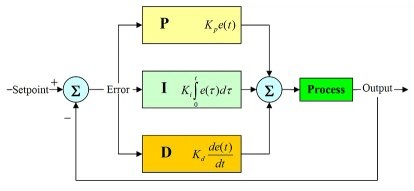
Numerical methods, of course, because robots and real-time data, but broadly calculus. They had to understand the concepts and implement them with enough confidence that they could explain the code at the competition. (I made sure they commented the code to death as well.)
And it was magical. After finding the line it went through a smooth and damped oscillation and could follow a straight line across the board with only occasional slight correction.
Yes, because movement and flow and accumulation are the subject of calculus, many engineers, even kids, use it.