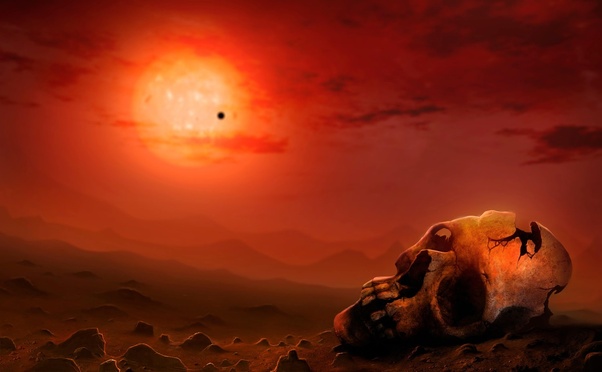
My friend, Earth will be a hell hole long before we meet the true end.
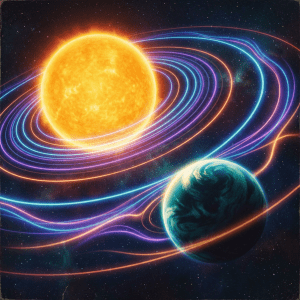
You see, the Sun ain’t getting any younger. It’s a middle-aged star slowly morphing into a red giant, a cosmic glutton ready to gobble up its planetary children.
About a billion years from now, the Sun’s expansion will kick into overdrive.
The oceans will boil, the land will scorch, and Earth will transform into a sweltering, uninhabitable wasteland. Our cities, those concrete jungles, will become ovens.
If humans haven’t found a way to skip town by then, well, let’s just say our species will be nothing more than a footnote in the universe’s grand history.
Fast forward a few more billion years, and the Sun’s outer layers will begin to engulf the inner planets, Mercury and Venus, in a fiery embrace.
Earth, being slightly farther out, might escape this initial inferno, but it won’t be a picnic.
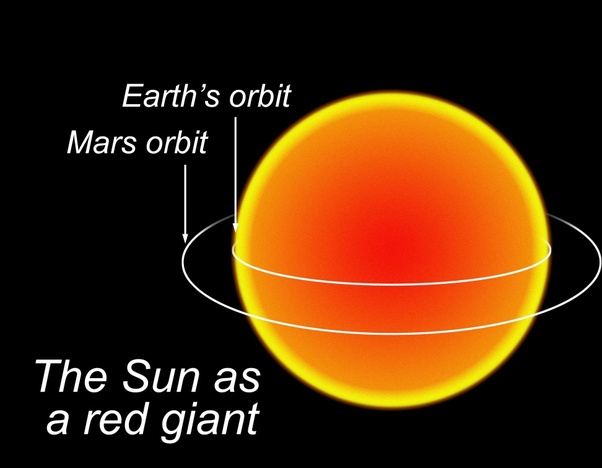
The Sun’s swollen girth will stretch its atmosphere outward, creating a scorching stellar wind that will batter our planet.
The remaining humans (if we haven’t managed to evolve or relocate by then) will face a truly apocalyptic scenario.
The Earth’s surface will be a scorched wasteland, with temperatures exceeding anything we’ve ever experienced.
The once-vibrant biosphere will be reduced to ash and dust, and the few remaining lifeforms will cling desperately to whatever meager resources they can find.
Eventually, even the hardiest organisms will succumb to the unbearable heat and radiation.
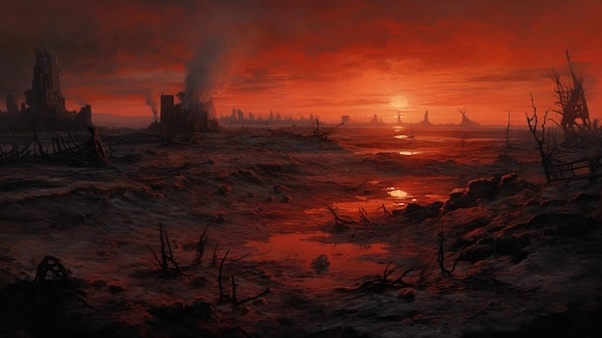
Earth will become a lifeless, barren rock, devoid of any trace of the once-thriving ecosystem that gave rise to us.
But the Sun’s hunger won’t be satisfied yet.
As the red giant continues to expand, it will eventually reach Earth’s orbit.
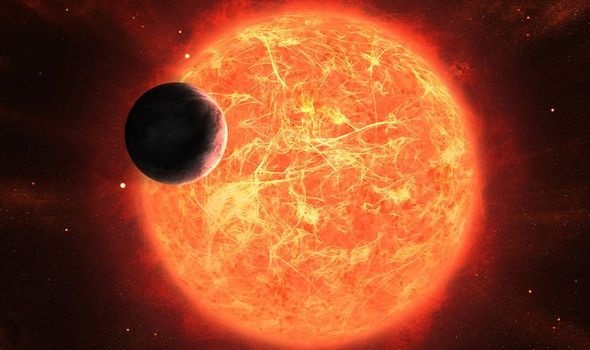
The intense heat and tidal forces will tear Earth apart, reducing it to a stream of molten debris.
In the end, Earth will be nothing more than a fleeting memory, a wisp of vapor swirling in the Sun’s fiery maw.
It’s a bleak ending, but it’s the inevitable fate of our planet, and indeed, of all planets orbiting stars.
The universe, in all its infinite vastness, is a cold and unforgiving place.
Last days? Earth will be heated to a plasma, disassembled, and most of its atoms will gradually sink to the center of the Sun.
Before that? Earth will be deep-fried to a crackly crunch, the crust will melt into a miles-deep pool of lava.
Before that? The seas will boil and the atmosphere (including the former seas) will be cooked off.
Before that? DNA denatures at about 140°F, so any remaining thing living on the surface will be cooked in its own bodily fluids. The last of the land animals and plants will go first. Denizens of the deep ocean might last a bit longer. The amount of energy entering the atmosphere will be staggering, and will lead to insane weather that I can’t imagine in any detail.
Before that? The CO2 in the atmosphere will all become bound to rocks, which means plants will become extinct. The tropics will become uninhabitable, followed by the mid-latitudes. With no greenhouse gasses in the atmosphere, night temperatures will plummet, perhaps to -100°F. That makes the Earth’s daily temperature range similar to that of the moon. If people still exist, it will be about as easy to live in outer space as on the earth. This is the last point at which people might inhabit the earth.